Trump says US 'not satisfied' with Iran deal yet

 EPA/Shutterstock
US President Donald Trump has said he is "not satisfied" yet with the terms of the deal being negotiated with Iran.
He said Tehran was "very much intent" on reaching an agreement to end the conflict, but added "so far they haven't gotten there", repeating Washington's willingness to resume strikes if one is not reached.
His remarks came after Iranian state TV reported what it said were details of a draft agreement, which included reopening the Strait of Hormuz and the withdrawal of US forces from the region.
The White House branded the text a "complete fabrication".
Both sides signalled progress had been made towards a deal late last week, prompting speculation an announcement was close.
However, Tehran soon cautioned a deal was "not imminent" while Trump said he had instructed his negotiators "not to rush into" one.
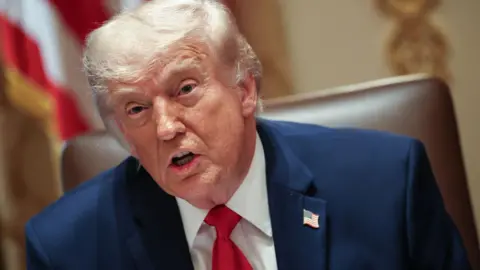
Speaking to reporters at a cabinet meeting on Wednesday, the US president said: "They just want to make a deal – I don't think they have a choice.
He added: "They're negotiating on fumes."
Trump also said: "Iran is very much intent, they want very much to make a deal.
"So far, they haven't gotten there and we're not satisfied with it. But now we will be we will be either that or will have to just finish the job."
US Secretary of State Marco Rubio said there had been "some progress and some interest" in negotiations, adding: "We'll see over the next few hours and days whether progress could be made."
While both Trump and Rubio continued to express optimism that talks were progressing well, neither gave any details of which specific disagreements continued between the two sides.
Trump did not address the 14 points reported by Iranian media earlier on Wednesday, which included a claim that the US would lift its naval blockade of Iran's ports.
It also claimed that in return, Iran would restore commercial traffic through the Strait of Hormuz to pre-war levels within a month, with the management and routing of vessels to be handled by Iran and Oman.
It did not mention Iran giving up its nuclear ambitions or handing over its stockpile of highly enriched uranium.
BBC News has not seen the purported draft.
The US and Israel launched wide-ranging strikes against Iran on 28 February, sparking conflict across the Middle East.
Iran responded by attacking Israel and US-allied states in the Gulf, and effectively closed the Strait of Hormuz shipping channel, which sent global oil prices soaring.
A ceasefire was agreed on 8 April which has largely been observed by both sides, but talks to resolve the conflict had stalled in recent weeks.
By Tuesday, the US had launched what it called "self-defence strikes" against southern Iran – which Tehran denounced as a "gross violation" of the ceasefire agreed in early April.
On Monday, the US launched strikes against Iranian missile sites and boats which it said were attempting to place mines.
It said the strikes were carried out in self-defence and designed "to protect our troops from threats posed by Iranian forces".
Tehran denounced them as a "gross violation" of the ceasefire.