Syria's president names final 70 lawmakers to new post-Assad parliament
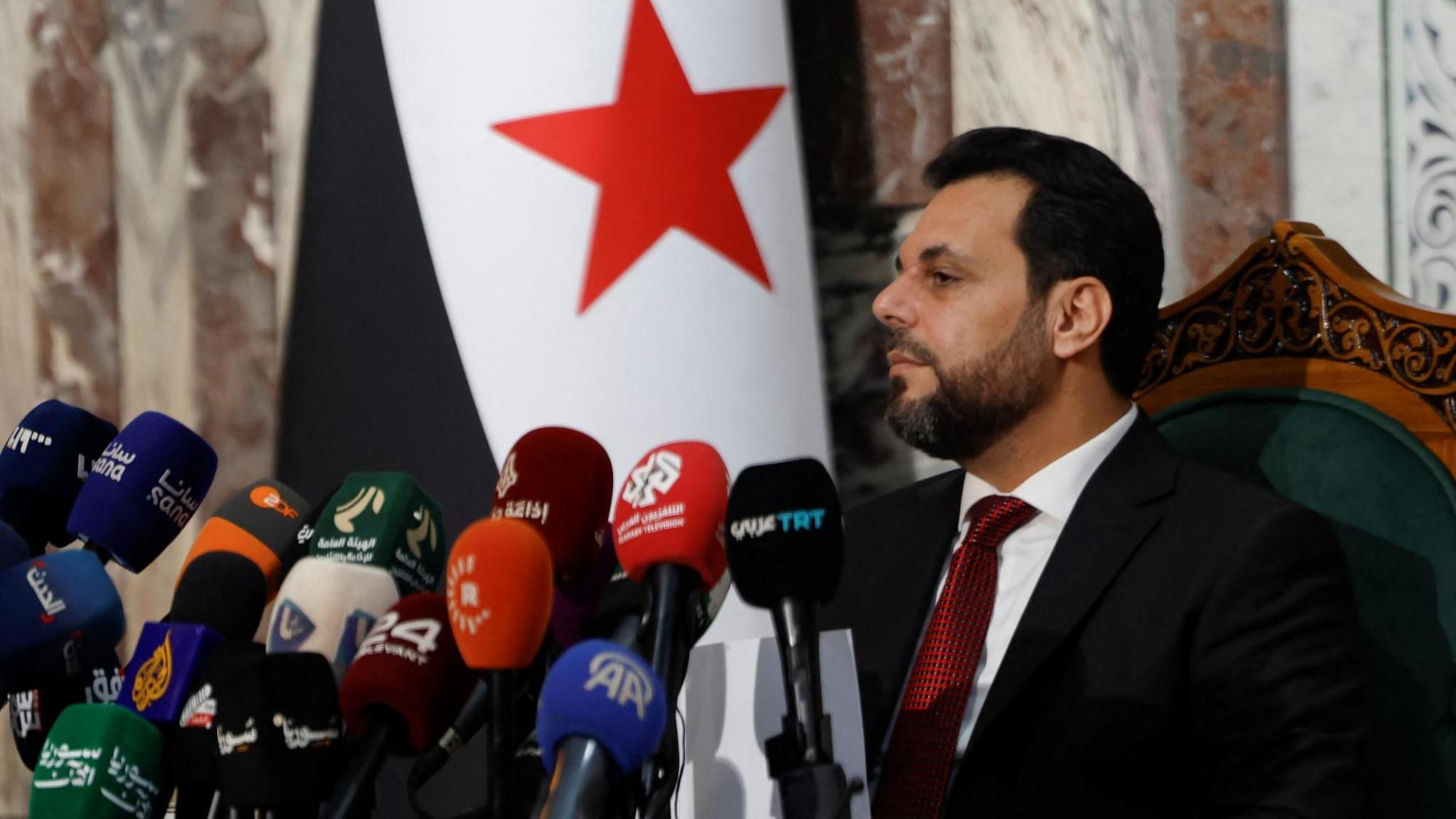 Image source, Reuters
Election official Mohammed Taha al-Ahmed said 15 of the president's appointees were women
-
Published1 hour ago
Syria's Interim President Ahmed al-Sharaa has appointed the final 70 members of the country's new parliament, paving the way for it to hold its first session next week.
Fifteen of the new lawmakers are women and 13 were imprisoned during the rule of Bashar al-Assad, who was overthrown in 2024. It is not clear how many are members of religious and ethnic minorities.
Last October, regional electoral colleges selected two-thirds of the 210-seat People's Assembly, which will be responsible for legislation during the transitional period.
After only six seats were won by women and 10 by minority candidates, electoral officials said Sharaa would use his appointments to address the imbalance.
Mohammed Taha al-Ahmed, chairman of the Higher Committee for the Syrian People's Assembly Elections, said the president's selections combined "the voice of sacrifice and the voice of experience" within the People's Assembly, represented the diverse segments of Syrian society, and reinforced national unity.
They included "relatives of martyrs and survivors of detention and chemical attacks" during the 13-year civil war, as well as academics, experts, professionals, community leaders and national figures "known for their experience, integrity and public service", he added.
Syria TV said the actress Rouzaina Lazkani was among the appointees.
Ahmed also said the new appointees hailed from across all 14 provinces, including two from Suweida, which has a predominantly Druze population.
The electoral college polls have not yet been held in Suweida because the southern province has remained outside state control since 1,700 people were killed in sectarian fighting between government forces, Sunni Bedouin tribes and Druze militias last July.
"When conditions become suitable to hold elections in this good and blessed governorate, God willing, we will conduct the elections there," Ahmed said.
The polls were also delayed by seven months in parts of the northern provinces of Raqqa and Hassakeh, which government forces captured from the Kurdish-led Syrian Democratic Forces (SDF) militia alliance at the start of this year.
More than 20 Kurdish parties rejected the lawmakers who were selected by electoral colleges in May, saying the process revealed "an approach of exclusion and marginalisation".
Fourteen Syrian civil society groups also criticised the electoral system last year, describing it as "plagued by deep structural flaws".
They said the president's direct and indirect influence over the membership of the Higher Committee and the electoral colleges rendered the elections symbolic.
And they expressed concern that the president's power to appoint one third of the members of parliament and name a replacement for anyone who lost their seat would allow him to dominate an institution meant to be independent and reflective of popular will.
Last week, UN deputy special envoy Claudio Cordone told the Security Council that Syria's transition was "at a critical phase, with opportunity and fragility existing side-by-side".
"Syria needs the People's Assembly to begin its work. And it needs all Syrians – in particular, Syria's women and its various components – to feel meaningfully represented in it," he said.
He added: "The scale of the challenges facing this transitional parliament cannot be overstated. New laws need to be debated and adopted, executive actions need to be reviewed, diverse voices must be heard, and progress made on the transition."
Cordone said the implementation of the ceasefire agreement between the government and the SDF was moving forward, with four SDF brigades integrated into government forces receiving state salaries and 1,300 SDF-affiliated detainees released.
But he warned that there had been no progress on the implementation of the roadmap for confidence-building and reintegration in Suweida.
He said the underlying issues that contributed to the sectarian violence remained unresolved, including accountability measures, and that calls within Suweida for secession threatened to undermine Syria's unity and territorial integrity.
Related topics
-
-
Published29 April
-
-
-
Published8 December 2025
-
-
-
Published18 February
-