Strait of Hormuz remains a fault line as Iran and US drift back into war
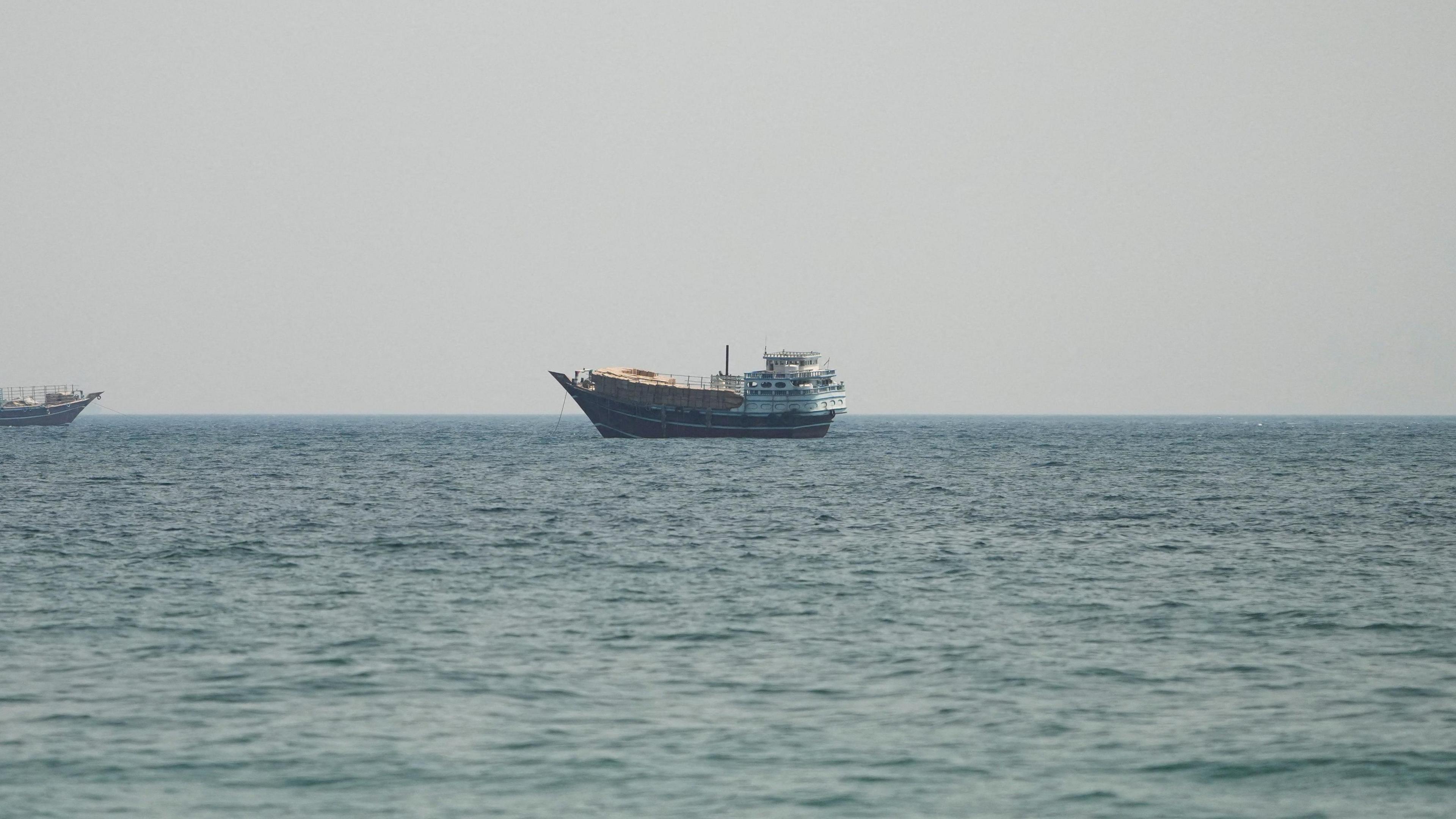 Image source, Reuters
-
Published20 minutes ago
The fragile "no war, no peace" situation since the US and Iran signed a tentative deal last month now seems to have tipped into war.
This on-again off-again truce could again wobble back into life through the efforts of increasingly exasperated Arab and Pakistani mediators, and the preference of both sides to avoid a return to a drawn out, all-out war.
But its biggest fault line is the status of the strategic Strait of Hormuz – and Iran is again making it clear that its control over this vital maritime corridor is a big, bright red line that neither military, economic nor diplomatic pressure can break.
"We told you: keep your word or pay the price," is how Iran's lead negotiator Mohammad Bagher Ghalibaf recently phrased it on social media, quoting the agreement.
-
Why the Strait of Hormuz matters so much in the Iran war
-
Published3 hours ago
-
Tehran has found backing for that word in the very vague details of the deal – known as a memorandum of understanding – which was drafted in haste in June.
It has been understood differently by both sides from the start.
Iran sees in point five of the 14-point plan a green light, which gives it sway over the management of this critical maritime corridor. Point five reads: "The Islamic Republic of Iran will make arrangements using its best efforts for the safe passage of commercial vessels."
The US reads that as saying Tehran has to open this strategic strait to the free flow of global oil and gas supplies, along with other vital commodities, including ingredients to produce fertiliser.
"You can drive a truck through those clauses," an Arab oil executive working in the region said.
While the new leadership, which emerged in Tehran from weeks of all-out war and waves of US-Israeli assassinations, appears to be aligned on their broad strategic vision for this new chapter of the Islamic Republic, there are clear and growing signs of splits over how to move forward.
"Some want to cash in on battlefield gains through diplomacy and some believe the ceasefire came too soon before Iran had inflicted enough pain on the US," assesses Robert Malley of the International Crisis Group, who was part of the US delegation that negotiated the landmark 2015 nuclear deal US President Donald Trump pulled out of in his first term.
Recent Iranian attacks on three vessels including a Qatari-flagged liquefied natural gas tanker, moving through a shipping corridor close to Oman's coastline to the south, were described by a diplomatic source in the region as the work of a "rogue unit" within the Islamic Revolutionary Guard Corps (IRGC).
In a system where the IRGC now plays a dominant role, Iran's non-negotiable red line is that vessels must now stick to its designated routes.
Last night, far from the thunder of this escalation, its parliament quietly introduced a new bill to manage the strait called the Strategic Action for the Security and Sustainable Progress of the Strait of Hormuz and the Persian Gulf.
That news was posted on X by Ebrahim Azizi, head of the assembly's national security commission, who told us in April that controlling the waterway was Iran's "inalienable right".
When asked when Iran would cede control, his reply was short and sharp – "never."
He described it as an "asset to face the enemy".
Iran's zero trust in the US' promises, fuelled by the repeated eruptions of war or threats during negotiations, have cemented its resolve.
Control over the strait is seen not just as a bargaining chip in this impasse, it also sees it as its new leverage, a new form of deterrence, as well as an economic lifeline – in case sanctions never get lifted, and its assets worldwide remain frozen.
But Tehran's determination to rewrite the rules in the region is also causing tension with its neighbours including Qatar, one of the main mediators in this crisis, as well as Iran's longstanding traditional ally Oman, which has played a role for decades behind the scenes.
Countries like the United Arab Emirates have made it crystal clear that Iran's plans to play a controlling role, including charging some form of "service fees" is unacceptable and sets a dangerous precedent.
A source informed on the back and forth said Oman had objected to Iran's inclusion of a specific mention in the agreement in that same contested fifth point – that Iran "will conduct dialogue with the Sultanate of Oman to define the future administration and maritime services".
Muscat now finds itself caught between the wishes of Washington, and Tehran wants to maintain, above all else, its longstanding reputation as the region's discreet diplomatic middleman.
"Oman has been very patient with the Iranians trying to keep good neighbourly relations," Omani analyst, Professor Abdullah Baabood, told the BBC's Newshour programme.
"This particular episode has driven Oman to take quite a substantial stand…but we want this conflict to be resolved through dialogue."
Some observers still see a small possibility of an eventual compromise.
"I don't think there are any great solutions out there but the sweet spot could be in some sort of arrangement in which no tolls were charged for ships passing through the strait but there could be some sort of shipping fees which allow Iran to show it retains its authority," said former senior British diplomat Simon Gass, who was part of Britain's team during the negotiations on the 2015 deal.
Beyond this dispute, there sits a fundamental misreading by each side of its enemy.
Both believe they emerged from this war with the upper hand; both believe the other will be forced by its own weaknesses to back down first.
It is always noted that Iran has a capacity "to absorb pain".
It did manage to exploit the window in this deal, which has now been shut by the US, where sanctions on exporting its oil were briefly waived.
But we saw during recent visits to Iran how its deepening economic and financial crisis is hurting. Inflation is soaring around a staggering 80 percent, and millions of jobs have been lost not just through this conflict but also by one of the longest internet blackouts in history.
Add to that the two wars in less than a year, as well as the major anti-government protests crushed with lethal force which killed many thousands.
President Trump has his own political and economic pressures, which may yet bring his team back to talks, however sporadic.
The crisis over the closure of this key corridor – an issue created by this war – has meant there has been almost no discussion on the core issue – the shape of Iran's nuclear programme.
The memorandum's 60-day window for intensive negotiations, which was never realistic, is yet another weakness.
"I give the truce a fair chance of recovering in some form because neither side can completely get its way as they will find out soon enough," said Malley, adding: "But given dysfunctionalities on both sides, I wouldn't entirely wager on it."
Related topics
-
-
Published18 June
-