Even camels can't cope: Africa's ships of the desert hit by rising temperatures
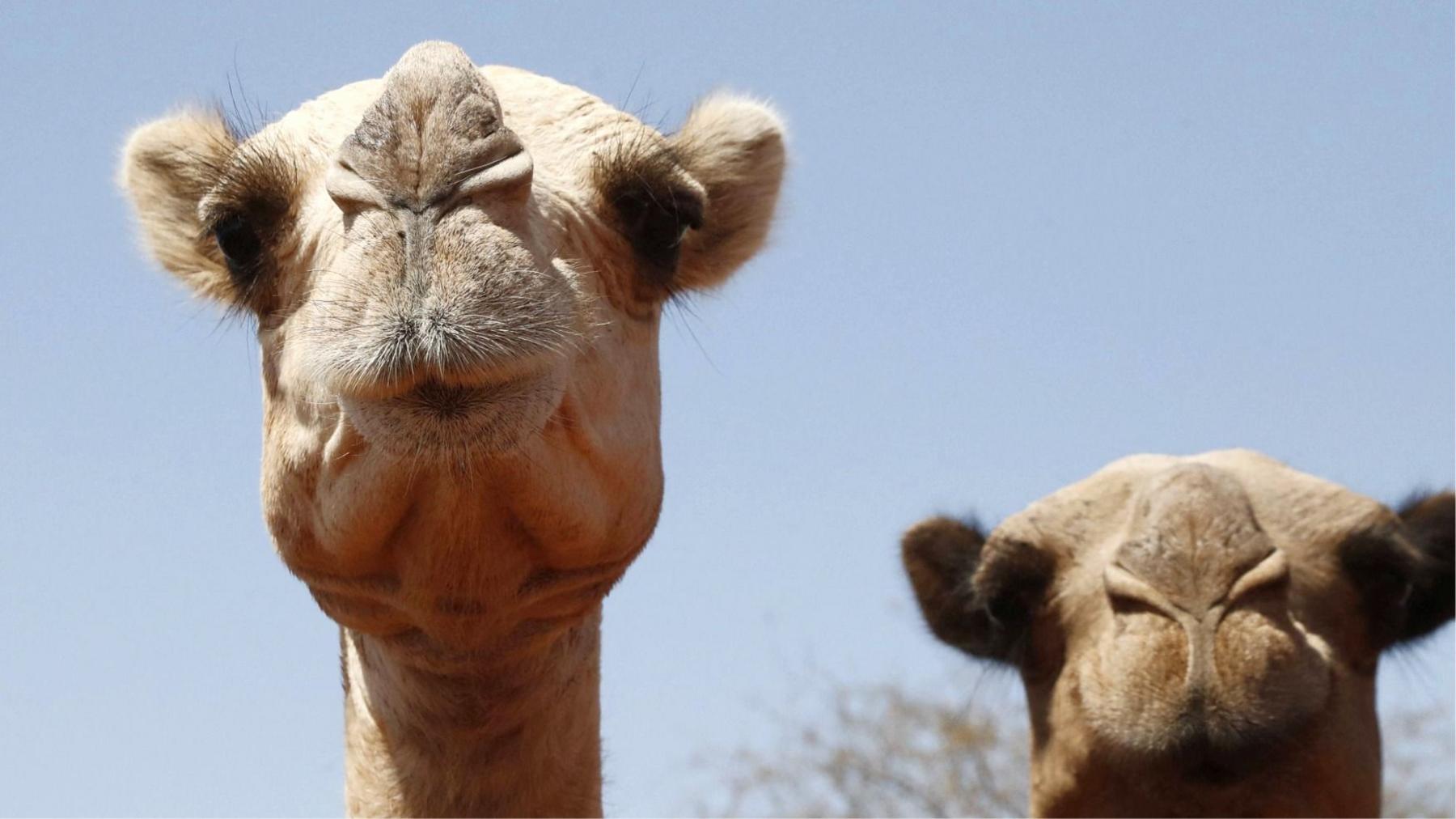 Image source, Reuters
Livestock herders in the Horn of Africa and North Africa have switched to camels over the years because of their famed resilience
-
Published23 July 2026, 00:22 BST
Camels are famously known as the ships of the desert, but even these hardy animals are not being spared from the extremes of rising temperatures in Africa.
The Afar region of north-eastern Ethiopia is one of the hottest and driest places on Earth, where nomads often lead camel caravans carrying salt through the desert.
"I can see my camels suffering from extreme heat," Ali Umer, a camel herder from Semera in Afar, told the BBC.
"They get blisters on their feet, their eyes become watery and the hot sand burns their skin and eats up their hair when they are sitting," said the 40-year-old who owns around 500 camels.
"Within the past one month I have lost eight camel calves because of the extreme heat, it has become much more intense and difficult.
"Even the wind, which used to bring cool air, now carries heat," he said, adding he had noticed these drastic changes in the temperature in recent years.
He is not alone in his observations: scientists, animal welfare workers and various studies all mention stress, fatigue, dehydration, disease prevalence as direct impacts of extreme heat.
The higher temperatures also indirectly make camels suffer by causing severe loss of water, vegetation, and reduced shaded areas.
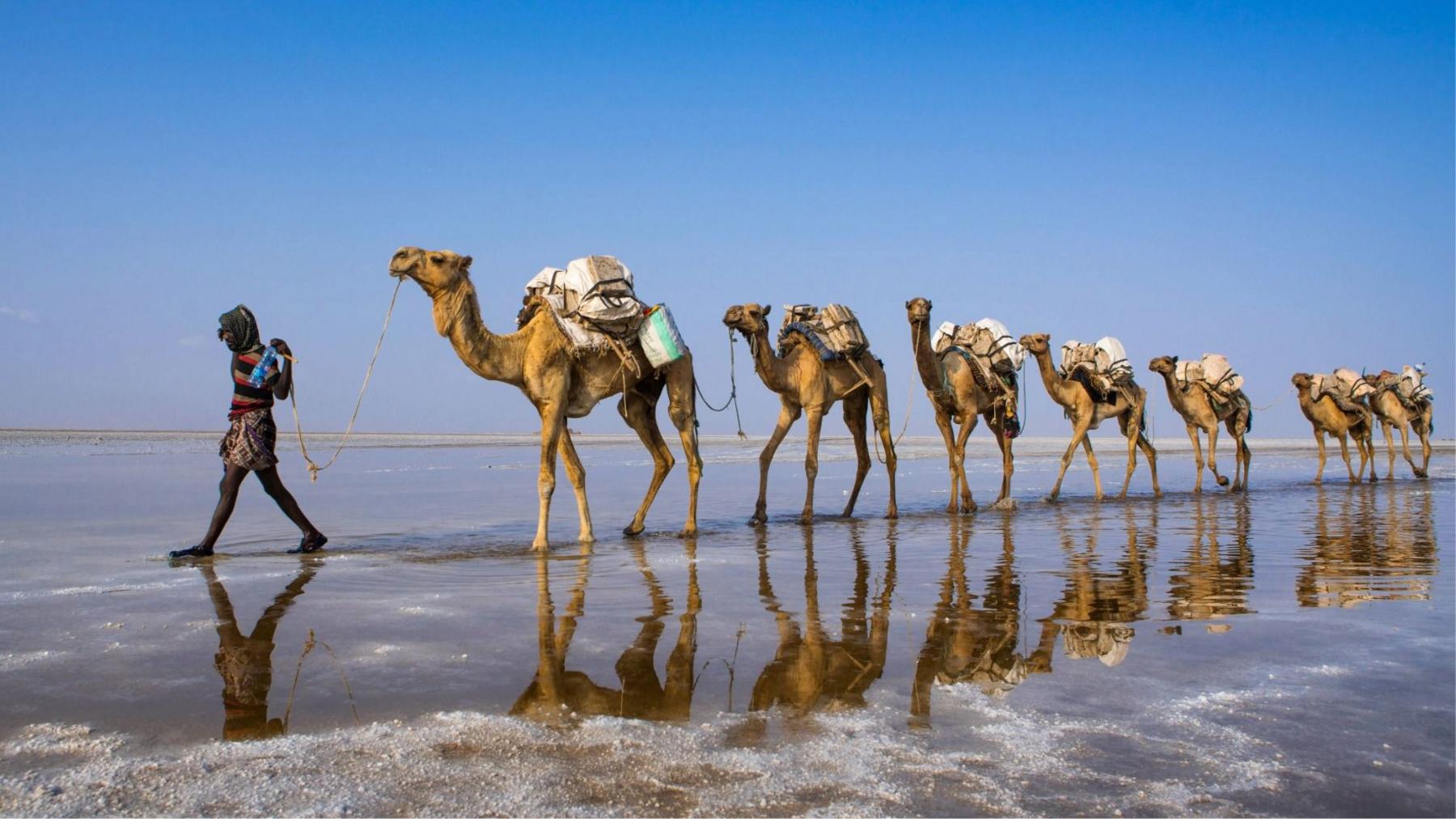 Image source, Corbis via Getty Images
Camels carry bricks of salt cut from the mineral-laden lakes in the Danakil Depression, where temperatures can top 50C
North Africa and the Horn of Africa host around 80% of the world's largest population of dromedary camels – those with one hump.
Over the years, farmers and cattle herders in these regions have switched to these animals because of their resilience to harsh heat and drought conditions.
But a study based on the perception of camel herders in southern Ethiopia, published in 2025, , externalshowed that high temperatures and climate variability had had a detrimental impact on camel herd health.
"Respondents reported that climate change and variability have affected camels' health, productivity, and reproductive performance," it said.
In neighbouring Somalia, the situation appears to be more serious. Research published in June, external has shown that drought-related camel mortality is a widespread crisis, affecting nearly 46% of camel-owning households.
The study included nearly 6,000 pastoral households and showed that the mortality was concentrated in northern regions, with Sool reporting a "staggering mortality rate of nearly 73%".
To play this video you need to enable JavaScript in your browser.
This video can not be played
Two of Ali Umer's shepherds in Ethiopia's Afar region bathe a one-month-old camel to cool it down
Extreme heat is the main cause behind the drought in the region although other factors like inadequate veterinary services and animal management make things worse, experts say.
An analysis by atmospheric scientists, external found that high temperatures in the region were behind the 2021-22 drought, as extreme heat makes water from soil and water bodies turn into vapour and plants release water in them into air as vapour.
Veterinarians say they are treating more sick camels and are seeing more deaths due to extreme heat and drought.
"We are seeing significant increase in cases of hyperthermia in camels as a result of which they get multiple infections," Hassan Nuya Guyo, a veterinary officer in Marsabit county in north-eastern Kenya bordering Ethiopia, told the BBC.
"In the last two years, we have seen a more than 15% increase in camel deaths in our county due to extreme heat."
Disease prevalence among camels and reduced milk yield from them are as a result of climate change impacts including heat stress, according to another study conducted in the Horn of Africa, external.
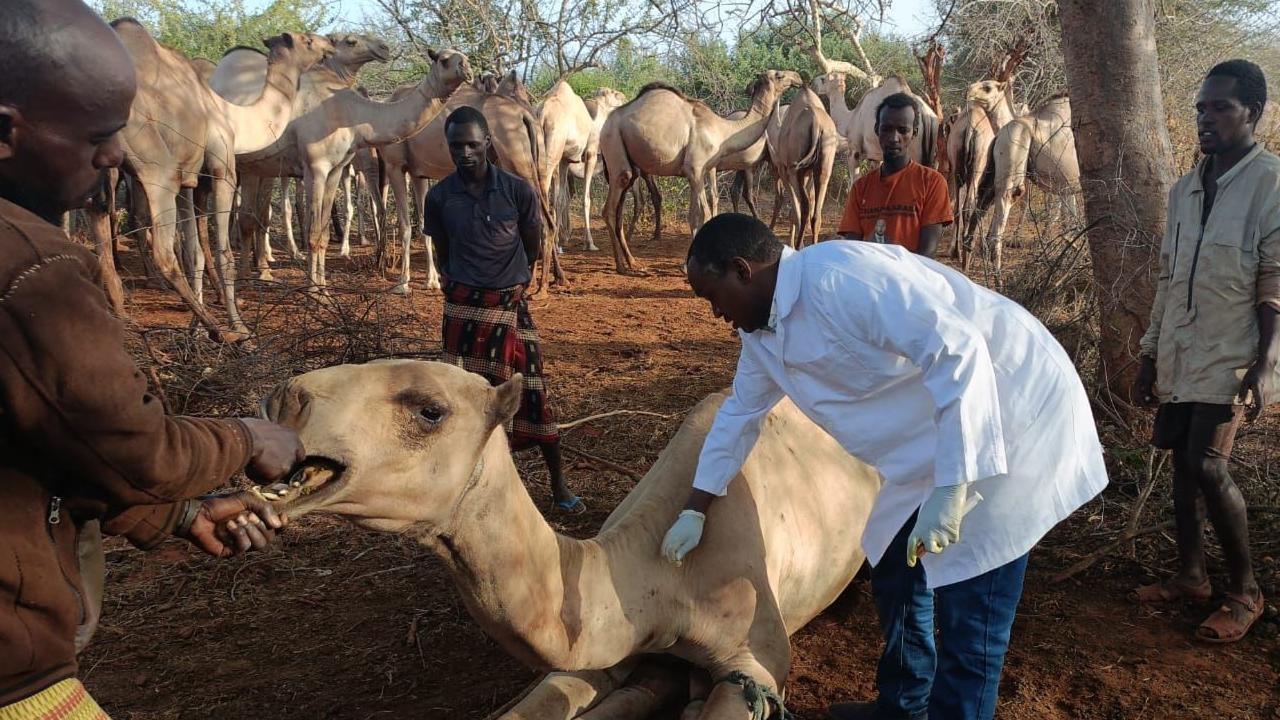 Image source, Hassan Nuya Guyo
Hassan Nuya Guyo, a vet in north-eastern Kenya, says in the last two years there has been a 15% increase in camel deaths in the area he oversees
A similar story is playing out in North Africa. A study in Algeria, external, published this year, has shown a significant increase in camel deaths during summer heatwaves.
"Time series analysis highlights significant seasonal mortality patterns, underscoring the need for targeted interventions during high-risk periods like peak summer months; such as strategic water provisioning, supplemental feeding, and enhanced disease monitoring," it said.
The World Meteorological Organization (WMO) says extreme heat events have become a common phenomenon in several North African countries with heatwaves having increased with a clear upward trend since 1981.
It said a number of countries in the region and the Middle East reported temperatures above 50C in 2024.
WMO's State of the Climate in Africa 2025 report, external said North Africa recorded the most rapid warming of the six subregions – 0.43C per decade – between 1991 and 2025.
Experts say camels comfortably beat the heat up to around 40C by mainly allowing their body temperature to fluctuate by several degrees throughout the day to deal with outside temperature.
By doing that they avoid sweating and, combined with concentrated urine and dry faeces, it helps them minimise water loss, while their thick skin coat helps them ward off solar radiation.
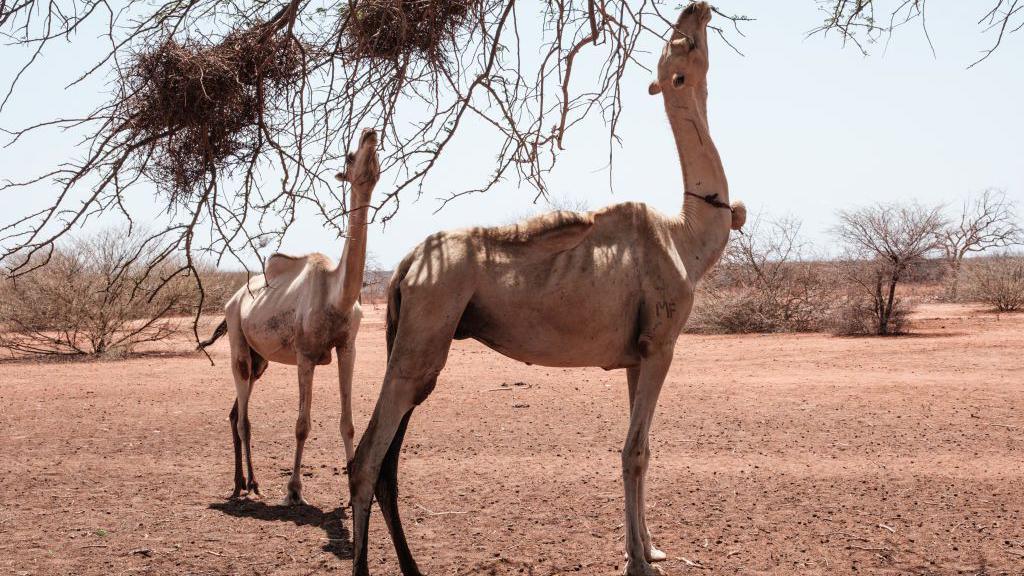 Image source, Getty Images
Experts say camels comfortably beat the heat up to around 40C by mainly allowing their body temperature to fluctuate by several degrees throughout the day
"But camels can also experience heat stress when temperatures rise beyond their comfort range," said Dr Mohammed Bengoumi, a scientist with the UN's Food and Agriculture Organization (FAO), who specialises in camel health and works in North Africa.
"In many parts of the Sahara, summer temperatures now frequently exceed 50C, increasing the risk of severe heat stress, particularly when accompanied by reduced vegetation cover, water scarcity, and limited access to shade," he told the BBC.
Professor Abdelmadjid Chehma at the University of Ghardaia in Algeria, who has conducted experimental works on camels in the Sahara Desert, has a similar conclusion.
"Our works show that prolonged day-and-night heat above 41 to 45C directly attack their cells," he told the BBC.
"Their immune system suffers because such heat levels damage their white blood cells and other cells because of stress, they [the cells] struggle to repair themselves and end up destroying themselves."
For camels this means when heat stress sets in, their metabolism slows down to limit internal heat production leading to sharp reduction in food intake resulting in lethargy and generalised fatigue.
That leads to drop in milk production and also causes reproductive disorders.
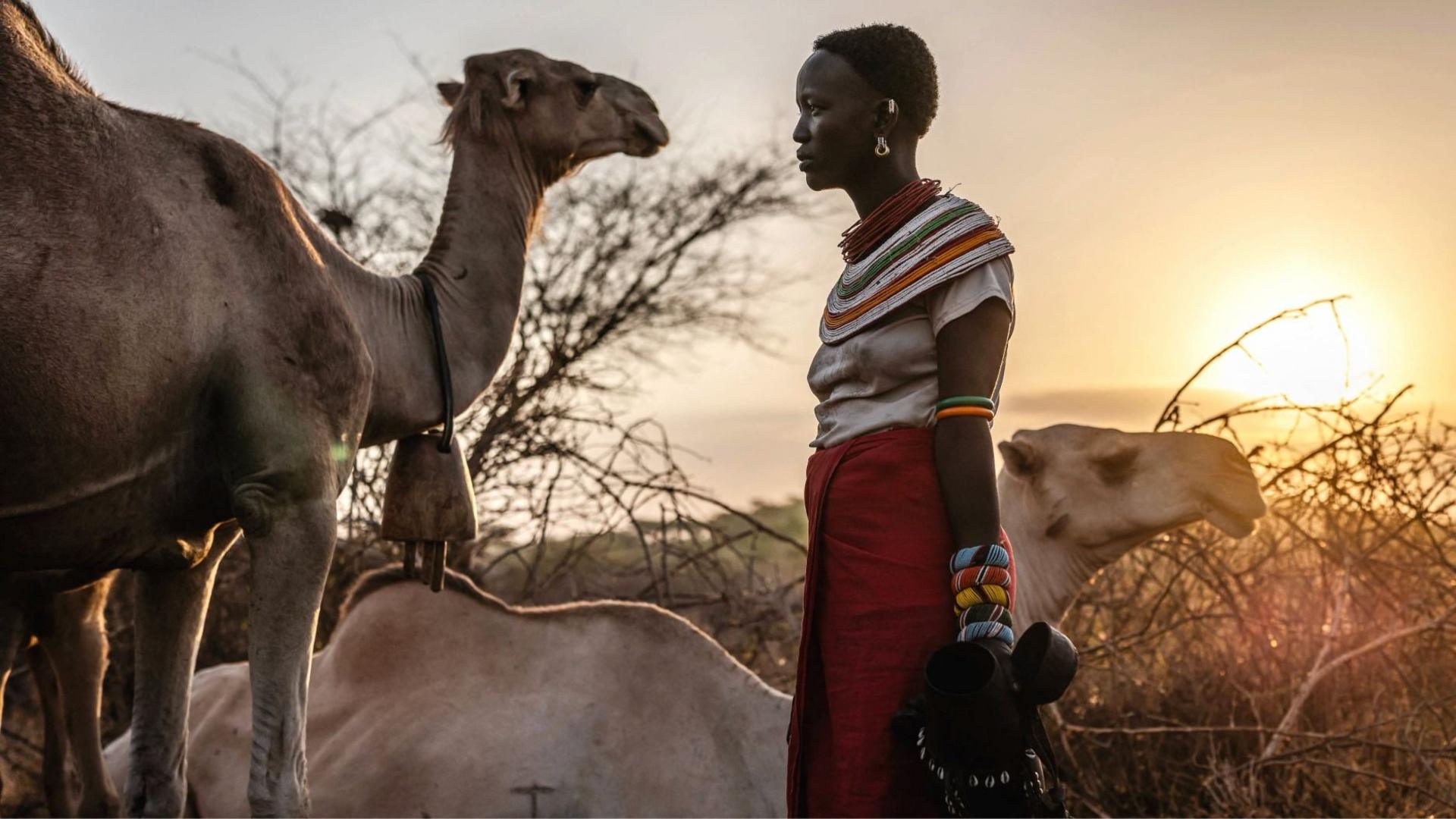 Image source, AFP via Getty Images
Pastoralists who rely on camels for milk are suffering as studies show that heat stress has reduced yields
Professor Mohammed el Khasmi, animal hydrobiology expert at the University of Casablanca in Morocco, has a long list of effects of heat stress he and his team have observed on camels.
Weight loss, inflammation, muscle and bone related illnesses, chemical imbalance due to kidney malfunction, infectious diseases caused by parasites were a few among them, he said.
While extreme heat is the primary culprit, its impacts become severe when other factors like loss of vegetation and water, lack of shaded areas and inadequate veterinary services add up, experts say.
This is why many herders in Ethiopia have moved their camels from the northern region, where the animals were found historically, to the south where water and vegetation are relatively available, experts there say.
"And this is not the seasonal movement of the herders," said Daniel Gelan, professor and pastoralist development researcher with Vision University in Ethiopia.
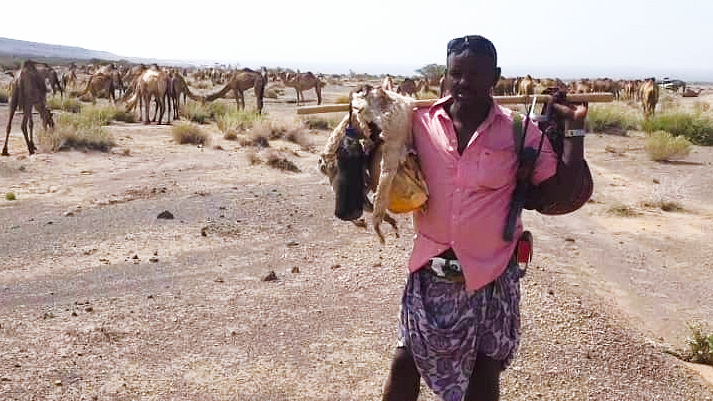 Image source, Ali Umer
Ali Umer says that within the last month he has lost eight camel calves because of the extreme heat
"They are leaving the northern region for good because they can no longer sustain camel herding there because of extreme heat and drought," he told the BBC.
The Horn of Africa has been recovering from the longest and most severe recorded drought spanning from 2020 to 2023, but now it is seeing another round of the harsh condition, according to charity organisation Oxfam.
It said water prices in some parts of Somalia had risen by more than 2,000% because of the drought.
Umer, the cattle herder in Afar, said he was worried that an outbreak of disease could start killing his adult camels anytime now.
His concern is valid, according to Prof Chehma.
"While camels remain the livestock herders' last line of defence against the desert, the unprecedented intensity of current heatwaves directly threatens their vital functions, turning this historically resilient animal into a climate victim," he said.
Additional reporting by BBC Amharic's Firehiwot Kassa
You may also be interested in:
-
One boy's fight to save his family from starvation
-
Published15 November 2022
-
-
Camel milk: Kenya's new 'white gold' Video, 00:01:43
-
Published2 February 2021
-
-
The women saving Somalia's animals. Video, 00:01:24
-
Published24 May 2017
-

Go to BBCAfrica.com, external for more news from the African continent.
Follow us on Twitter @BBCAfrica, external, on Facebook at BBC Africa, external or on Instagram at bbcafrica, external