From jumpers to slug pellets – how British wool is back in demand
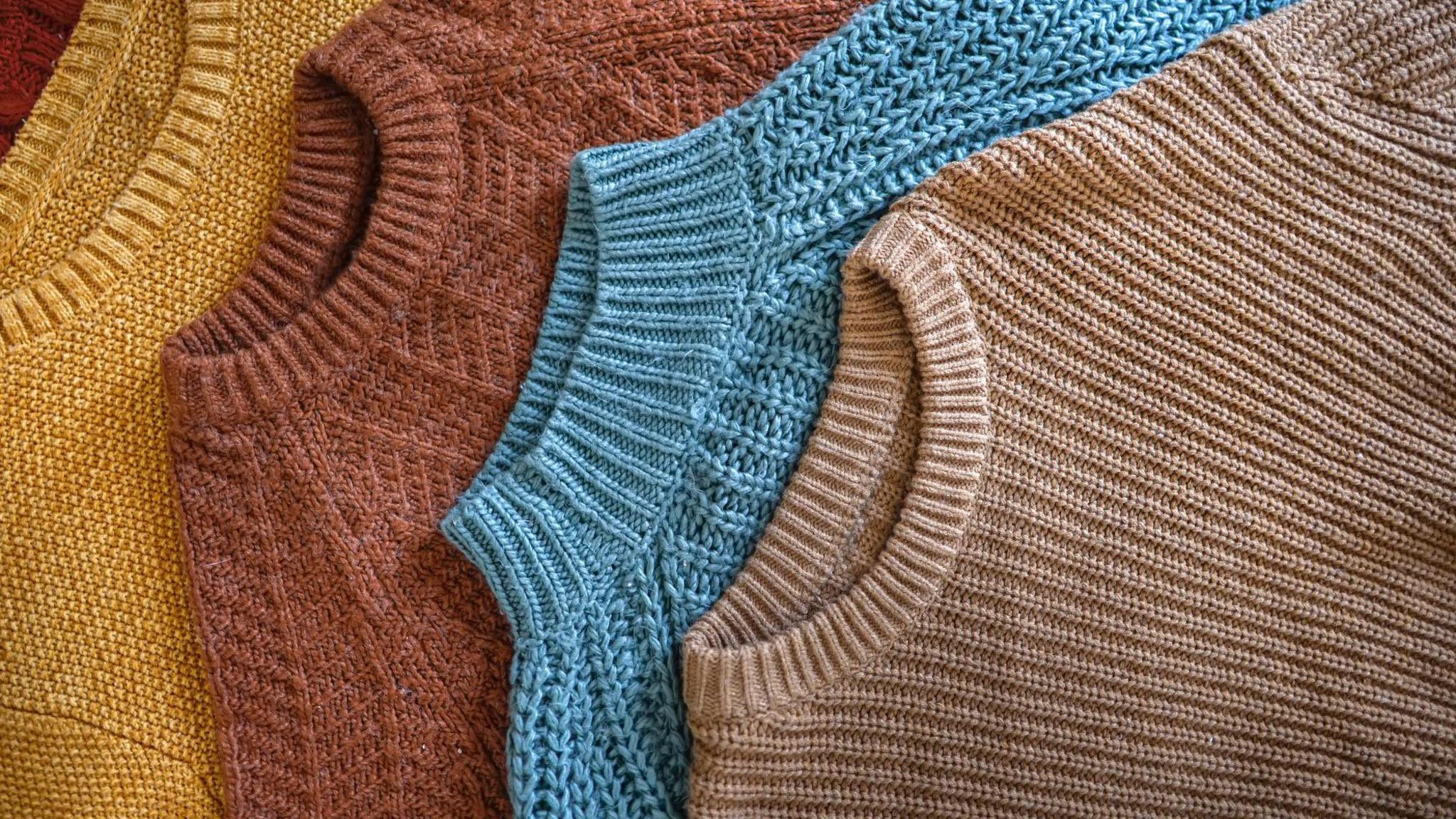 Image source, Getty Images
An increased demand in wool has meant prices have increased more than 70% in the last year
-
Published3 hours ago
The price of wool has increased more than 70% in the last year, helped in part by a smaller British flock of sheep and a dwindling of the global stockpile produced during the Covid-19 pandemic.
Prices reached a 10-year high earlier this year, and comes after some farmers burnt fleeces in protest against how little they were being paid.
On average, a kilogram of clean shorn wool sold for £2.54 in the most recent sale, compared with less than £1.50 a year ago.
The rising cost may not be welcomed by shoppers seeking woolly socks and jumpers this winter, but it does mean farmers are more likely to cover the cost of shearing.
And while most people associate the versatile fibre with jumpers and blankets, it is also used in products ranging from flood protection systems to slug pellets, further helping fuel demand.
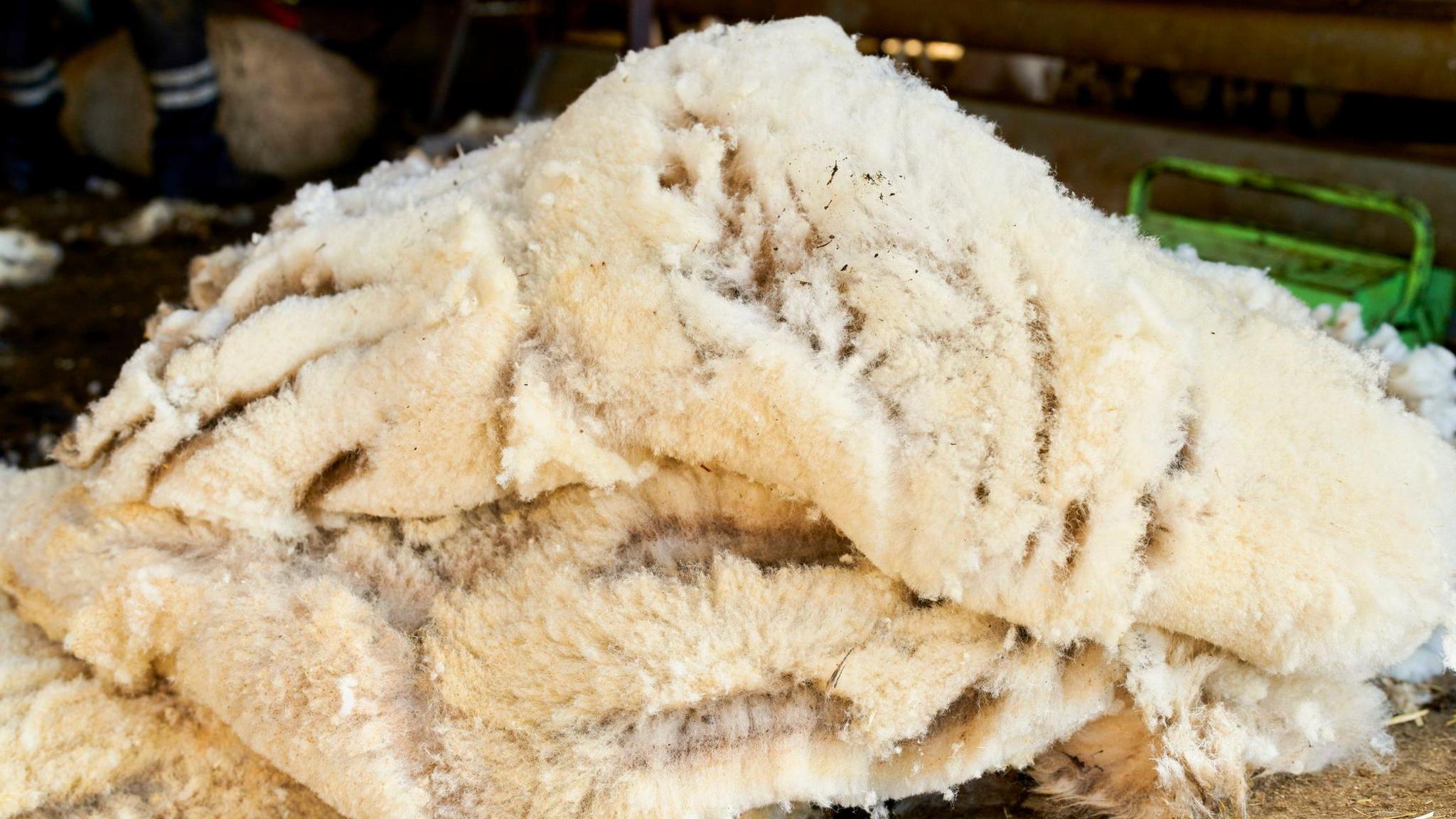 Image source, Getty Images
The wool industry has survived centuries, with the versatile fibre being spun back in the Bronze Age
Wyn Williams keeps a flock of 700 sheep on the hills above Llanfair Caereinion in Powys and said it could be an expensive business.
He said the demand and subsequent increase in price "helps cover costs".
"We've got professional shearers coming, it's not everybody who can shear," Williams said.
"You've also got your helpers, the wool wrappers and everything else so it assists with the costs."
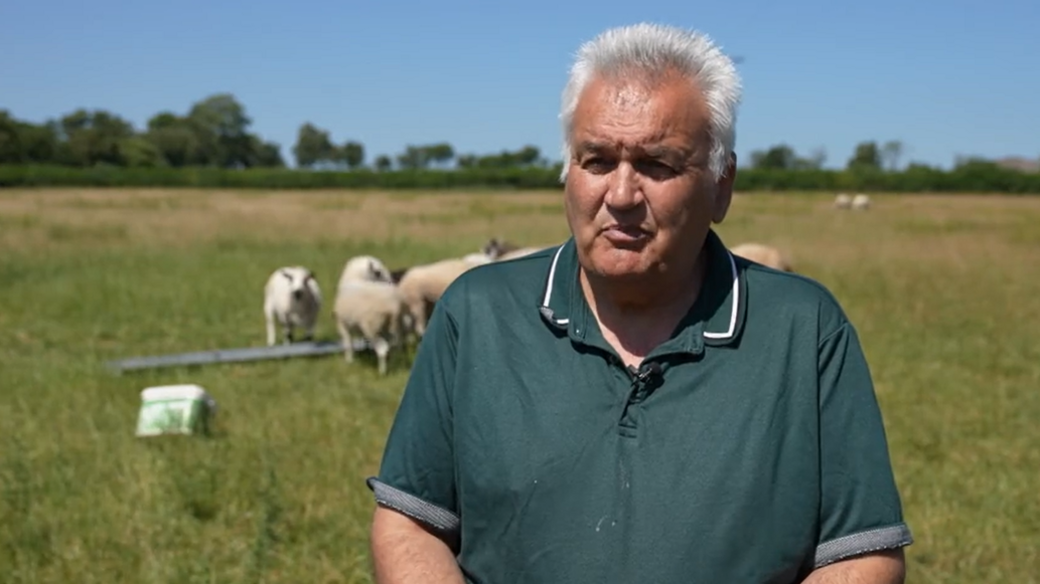
Wyn Williams's sheep live on the hills above Llanfair Caereinion
Like most sheep farmers, Williams primarily rears them for meat and breeding rather than for their wool, but it still has to be taken care of.
"Most importantly we have to shear from an animal welfare and health perspective.
"Who would want a big, strong winter coat still on with the excessive heat we're having at the moment?"
-
Sheep are disappearing from our hills – and our dinner plates
-
Published6 March
-
The fleeces from Williams's farm are taken to a local wool depot in Newtown, where manager Barry Bellis sorts through them by hand.
It is an industry that has survived centuries, with wool being spun back in the Bronze Age.
Bellis said he could spot 68 different grades of wool as he had worked through the fleeces, with the best destined for formal wear while others ended up as slug pellets.
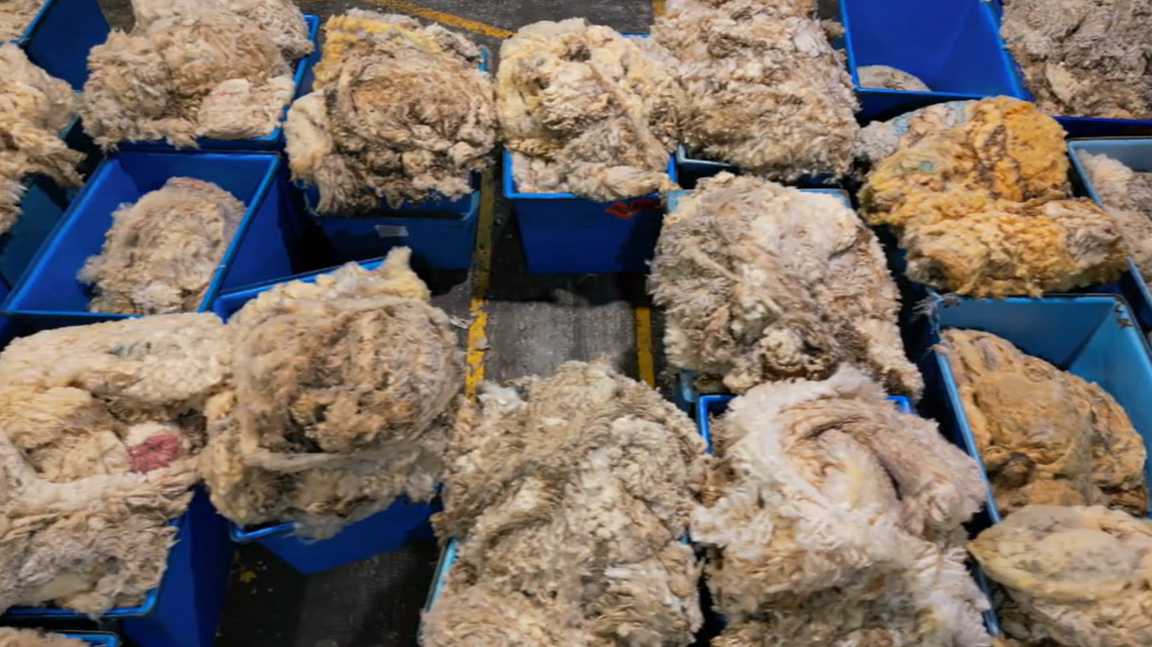
The warehouse holds piles and piles of fleeces, graded and ready to be packed up for processing
"If you've got a nice white fleece, you're able to dye it pink, green, blue, whatever colour you want," he said
"The blue face Leicester fleece, which is our closest to the merino, that will go into knitwear like men's suits."
Wool from Welsh mules is more likely to be walked on than worn.
"This type of fleece, which contains kemp," Bellis explains, "that will tend to go into a carpet blend because of the colour."
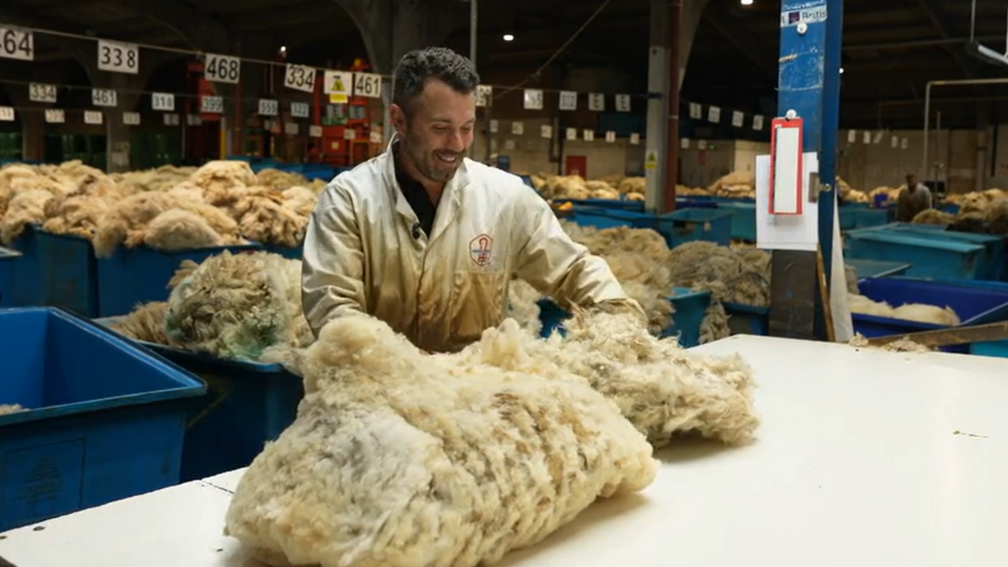
Barry says the best fleeces are destined for formal wear while others ended up as slug pellets
Gareth Jones, from British Wool said the price boom came down to supply and demand.
"There are less sheep in Wales, less sheep in the UK, producing less wool and if we look at a comparable market like New Zealand, there are less sheep there.
"They also had a carry-over of wool since Covid – that's cleared in the last two years," he added.
Despite less wool being available global interest in using the product has seen a resurgence.
"It is in demand worldwide," Jones said.
"China is an important market for us, we also have a bedding manufacturer in South Korea, and we have some licensees in Japan."
As the rising costs in fuel and fertiliser continues to be a challenge for many farmers, making money back from wool comes as a welcome relief to some.
Related topics
More top stories
-
-
Published1 day ago

-
-
-
Published1 day ago

-
-
-
Published1 day ago

-