Lindsay Clancy's trial put postpartum psychosis in the spotlight. Experts want progress to follow
 Image source, Reuters
-
Published1 hour ago
Warning: This story contains distressing details and discussion of attempted suicide
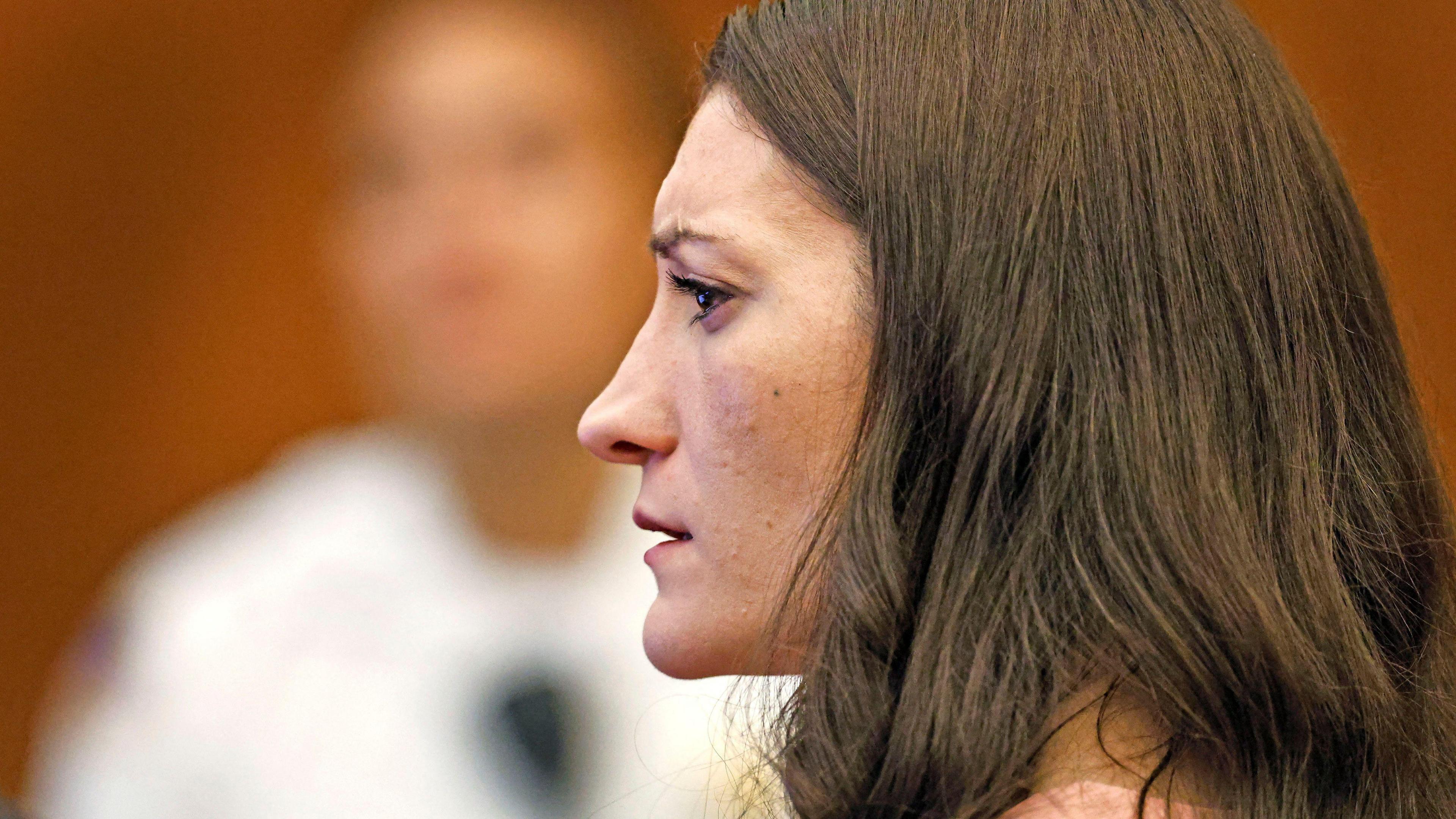
A month before Lindsay Clancy killed her three children, she went to her mother and then-husband and told them she had "thoughts of harming the children".
Clancy's mother Paula Musgrove testified this week that during that time her daughter would say: "'This isn't me, I've never been like this before.' And I would agree, because she wasn't," Musgrove said.
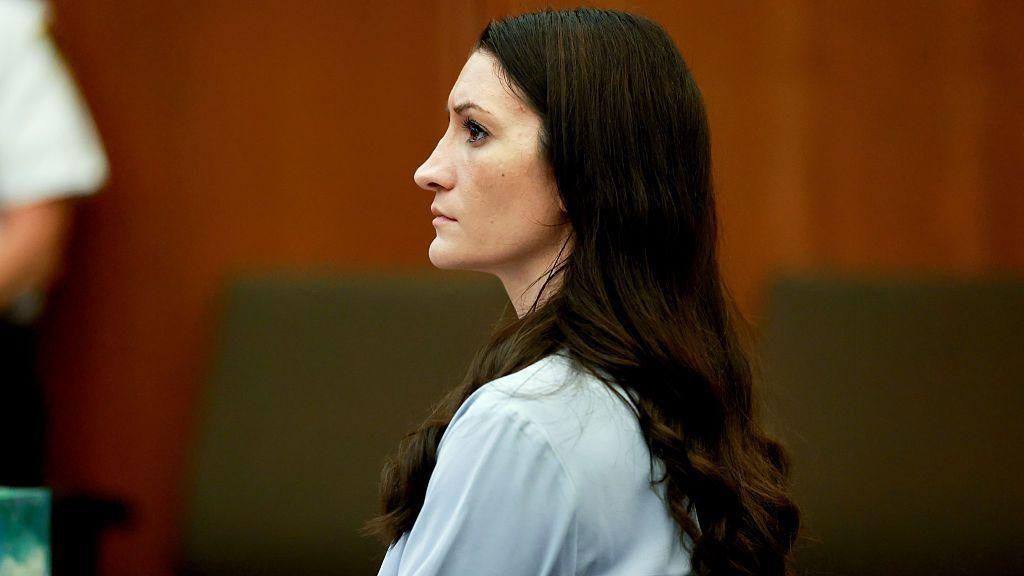
Clancy is not disputing that she carried out the killings, but has pleaded not guilty to murder charges. Her defence argues that Clancy was suffering from postpartum psychosis when she took her children's lives.
Her symptoms included hallucinations and delusions that began after the birth of her third child.
"She was unable to conform her behavior to the rule of law and she had no appreciation for the wrongfulness of her act," Paul Zeizel, a clinical and forensic psychologist, said on the stand on Wednesday.
Prosecutors, meanwhile, alleged she made a calculated decision to intentionally kill her children – Cora, five, Dawson, three, and Callan, who was eight months.
With postpartum psychosis, which is considered a medical emergency, patients can experience mania, depression or a mixture of both. They also endure psychotic symptoms and in rare, severe cases, may harm or kill themselves or other people.
It is among the most serious illnesses a woman can experience after giving birth, experts told the BBC, but it remains unclassified in medicine's encyclopaedia of psychiatry.
The illness is gaining more attention as Clancy's trial approaches the one-month mark, and has opened up a dialogue about the mental health complications that women can experience after giving birth.
What is postpartum psychosis?
Meghan Cliffel was eight months postpartum from the birth of her second daughter when she began hallucinating.
It was a Friday in 2015 and she had just finished her workday in New York City. She became convinced that people were following her, she thought she was being recruited for a cult, and she thought the world – including her husband – was out to get her and her two daughters.
Some 24 hours later, she was handcuffed to a gurney and taken to a psychiatric hospital.
She would go on to spend the next 12 days there receiving treatment for postpartum psychosis.
The condition often presents with mood symptoms such as irritability, mood swings, insomnia and what medical professionals would call a delirium-like state, Susan Hatters-Friedman, forensic psychiatry professor at Case Western Reserve University, told the BBC.
A patient often experiences psychiatric symptoms that appear rapidly, she said.
"Psychosis in general as a term means that the person's out of touch with reality, and that often includes hallucinations, hearing things, seeing things that aren't there, delusions, which are fixed false beliefs that are not consistent with your culture," Hatters-Friedman said
On the day Clancy killed her children, she played with them outside building a snowman, her former husband, Patrick Clancy, said.
"She was having one of her best days," he told the court during the trial.
Clancy had previously told her then-husband she was having thoughts of suicide or harming the children, but on that day everything seemed better, he testified.
When evening came that January 2023, he went out to grab dinner for the family of five. When he returned, he found his children dead and Clancy injured from a suicide attempt.
That contrast demonstrates the light-switch – or waxing and waning effect – that can be postpartum psychosis, experts told the BBC.
"A woman can appear fine one minute and be really ill a little bit later," said Jennifer Payne, a reproductive psychiatry expert at the University of Virginia.
Experts say it's not entirely clear what causes postpartum psychosis. It could be related to hormonal changes and stress after giving birth, and there seems to be a link between previous mental health challenges and developing the illness while postpartum.
 Image source, Reuters
Recognition in the DSM-5
There is one major barrier standing in the way of awareness and better treatment of postpartum psychosis, experts and Cliffel agreed – it needs to be formally included in the Diagnostic and Statistical Manual of Mental Disorders, commonly referred to as the DSM-5. It's the mental health handbook published by the American Psychiatric Association.
Veerle Bergink, a professor of psychiatry and the director of the Mount Sinai Women's Mental Health Center, is among the people working diligently to get postpartum psychosis included in the DSM-5.
Without a mention there, the illness does not get discussed in medical school textbooks; students do not learn about it, and people do not talk about it much. Its addition is essential, she said.
"You can only investigate and talk about the disease if you give the disease a name, and if it has criteria," Bergink said. "So you don't get research funded, there is no money, there is no care system, there is no insurance code."
For people like Cliffel, who experienced the illness first-hand, the lack of mention in the DSM-5 is "bananas".
"It feels like an erasure," she said. "I know how healing it is to have somebody finally name what you have."
She too referenced the cascading effects that the lack of classification has on educating clinicians, family knowledge and insurance coverage.
"And so I see this moment," she said, referencing the Clancy trial, "[as one where] we cannot be surprised when tragedy happens, and instead, we can proactively build to care for mothers and families."
What does treatment look like?
Postpartum psychosis is treatable, experts stressed.
Lithium, a mood stabilizer, is a common way to treat the illness. It is often given to patients to prevent a relapse.
But a variety of other treatments – including electroconvulsive therapy (ECT) and antipsychotic medications – are also used depending on the patient and their symptoms.
Many women will require a stay in a psychiatric hospital, Hatters-Friedman said, but with treatment people can recover.
The outcome in Clancy's story is a very rare one, experts said. Women with postpartum psychosis hurt or kill children between 1% and 4% of the time, research shows, external.
For Cliffel, her treatment plan had many prongs. She went to therapy, did Eye Movement Desensitization and Reprocessing (EMDR) therapy (a type of psychotherapy), and took lithium for a full year.
Much of the treatment that helped her, she found by happenstance.
"There wasn't a ladder of care [showing] 'this is how you heal from this experience'," Cliffel said.
She recalled speaking with breast cancer survivors who told her there were clear steps to follow after a breast cancer diagnosis.
"It's not like that for postpartum psychosis, so it was a lot of kind of like fumbling around in the dark," Cliffel said.
But medical professionals gave her tools and the treatment she needed to go on and have a third child.
To ensure she did not experience postpartum psychosis again, as soon as her son was born, she began taking lithium, and did so for a full year after his birth.
"We should have a system that actually understands maternal mental health and gives proactive support to all parents and educates them about the things that can happen," she said. "I mean, maternal mental health issues are the most common complication of childbirth."
Related topics
-
-
Published23 hours ago
-
-
-
Published9 hours ago
-