Brad Pitt's children are dropping their dad's surname – here's why I did the same
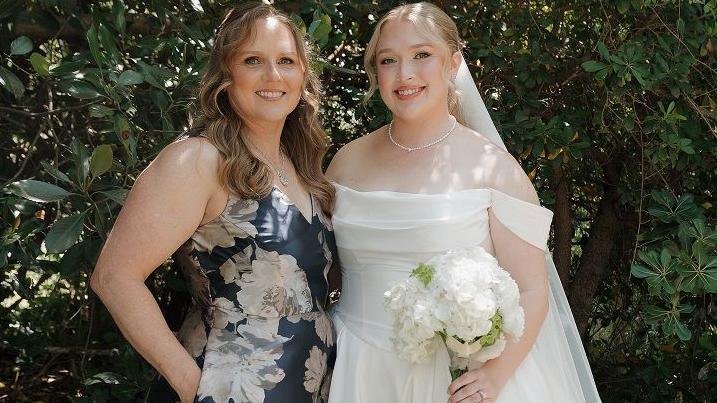 Image source, Kylee Lynn Photography
Hannah (right) chose a combination of her mother's maiden name and her husband's surname after she got married
-
Published44 minutes ago
For more than a decade, Hannah had been known by two surnames.
On social media, sports rosters, email and restaurant bookings, she was Hannah Leonard, sharing her surname with her mother.
But legally, and at work and school, she had a different surname – the one she inherited from her father.
Hannah's parents divorced when she was a toddler and she hasn't had much of a relationship with her dad since. She says she last saw him seven years ago and isn't sure where he's living now.
Last month, the 25-year-old in California legally changed her surname to Leonard-Ripley, removing the reminder of her father and replacing it with a name combining her mother's maiden name and her husband's surname.
That same month, two of the adopted children of Hollywood divorcees Angelina Jolie and Brad Pitt undertook an important legal step in the process to drop their father's surname, something they began earlier this year.
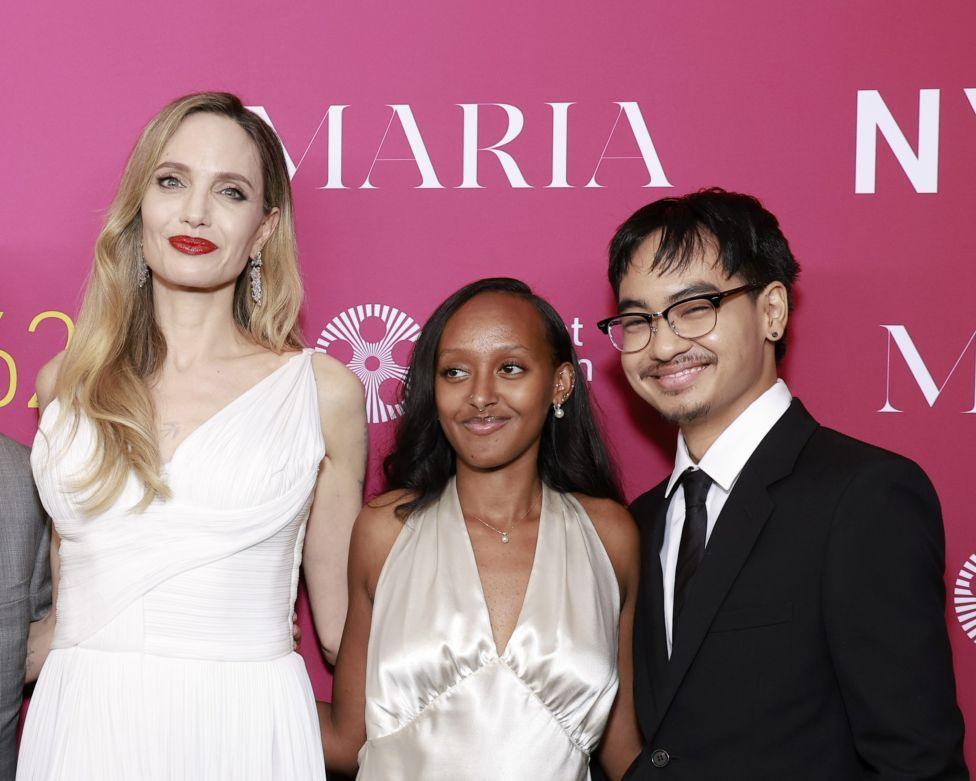 Image source, Jason Mendez/Getty Images
Angelina Jolie with her children Zahara Marley Jolie-Pitt and Maddox Chivan Jolie-Pitt
In April, Zahara Marley Jolie-Pitt and Maddox Chivan Jolie-Pitt, aged 21 and 24, filed documents to remove their father's surname from their names, according to media reports.
In June and July, the siblings carried out the legal requirement of publishing their name-change intention in a local paper for four weeks.
Both have already used the surname Jolie in some circumstances, including Zahara during her graduation ceremony earlier this year and Maddox in his credits on a film. Another of Jolie and Pitt's six children, Shiloh, changed her surname to Jolie in 2024.
Zahara and Maddox will have to wait until their court appearances in September to get the approval from a judge to change their names.
Jolie met Pitt on the set of the 2005 film Mr and Mrs Smith, married in 2014 and filed for divorce in 2016 following an incident on board a private plane. Jolie told Vogue, external in 2020 that she had left Pitt for the "wellbeing" of her family.
A source close to Pitt told BBC News that he regretted how things had unfolded with his family and that, while he was "heartbroken", he respected his children's decisions.
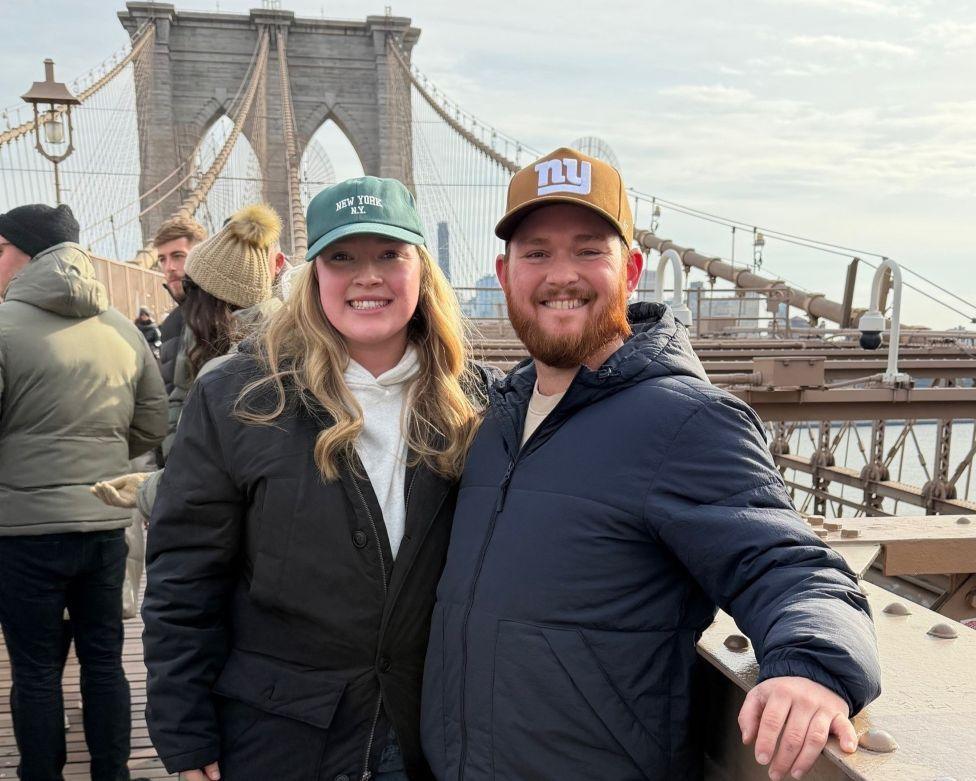 Image source, Hannah Leonard-Ripley
California-based Hannah, pictured with her husband, says the cost had initially deterred her from changing her name
Hannah says she had no emotional connection to her previous surname, and it often confused people when she would use two surnames in different contexts.
She had wanted to legally change her surname for years, but had been deterred by the cost. Getting married gave her the push to finally make the change.
"I've never felt like my last name reflected the love that encompasses my life," Hannah says. "And I wanted to make sure that my name reflected that. My mother's love and also my husband's love are very abundant and so important to me."
"Surnames have a close connection to identity," says University of Chester lecturer Dr Harry Parkin, who has studied the history of names. When people change theirs, it can be a sign that they want to disconnect and disassociate from it, he adds.
Maggie, from Lincolnshire, told BBC News that she had no emotional connection to her previous surname, which she had inherited from her father.
Her parents split up when she was a child and while she isn't estranged from him, she says they've never been close.
'I feel more like myself'
She adds that she had always "hated" the surname she inherited from her father, which included a profanity that she was teased for at school. "I didn't want to be associated with it," she says.
Changing her surname to match her mother's felt like a relief and Maggie says she now feels "more like myself".
"I wanted to be part of my mum's family," she says.
Dr Becca Bland, a family counsellor and coach specialising in estrangement, says that people who are distanced from a relative or are estranged might choose to change their surname as a psychological defence mechanism to "help you separate yourself from something that could be problematic or traumatic".
She says changing their name would mean they wouldn't have to keep repeating a surname that they may associate with bad memories or that they felt connected them to a family they didn't identify with.
People who are estranged from their parents may feel a range of emotions, including grief, loss and a sense of freedom, says Dr Lucy Blake at University of the West of England, whose research focuses on family relationships. It can be an isolating experience because people worry about facing judgement from others, she says.
Blake dismissed criticism that some younger people are cutting ties with relatives "without much thought". Research shows that adults who estrange themselves from relatives often do so "with a great amount of care and consideration over time," she says.
If people want to change their names in England and Wales, they have two options. The cheaper option is by unenrolled deed poll, which a person can do by themselves or through a private company for a fee. You can also change it by enrolled deed poll, meaning there's a public record of it, through the High Court for £53.05 ($71).
If you were born or adopted in Northern Ireland, external, you can either change your name by deed poll or recording a change of name in the presence of a legal representative, which costs £35.
If you were born or adopted in Scotland, you can change your name by sending an application to the National Records of Scotland, external, which costs £40.
Changing your surname can come with some hurdles.
In England, Wales and Scotland, if you are under the age of 16 you need the consent, external of everyone with parental responsibility for you.
Maggie says she waited until 16 to make the change, when she did not need her father's consent.
"It was so frustrating when I was so sure it was something I wanted to do," she says.
You also have to update government bodies and companies including the Passport Office, DVLA, the Student Loans Company, your banks and your GP.
For Hannah, in California, changing her surname took around three months and cost her hundreds of dollars, including a $400 filing fee and $130 to put adverts in a local newspaper. She described the latter requirement as "so outdated and odd".
Related topics
-
-
Published1 June 2024
-
-
-
Published6 days ago
-