Electric vehicle sales targets could be cut after pressure from car makers
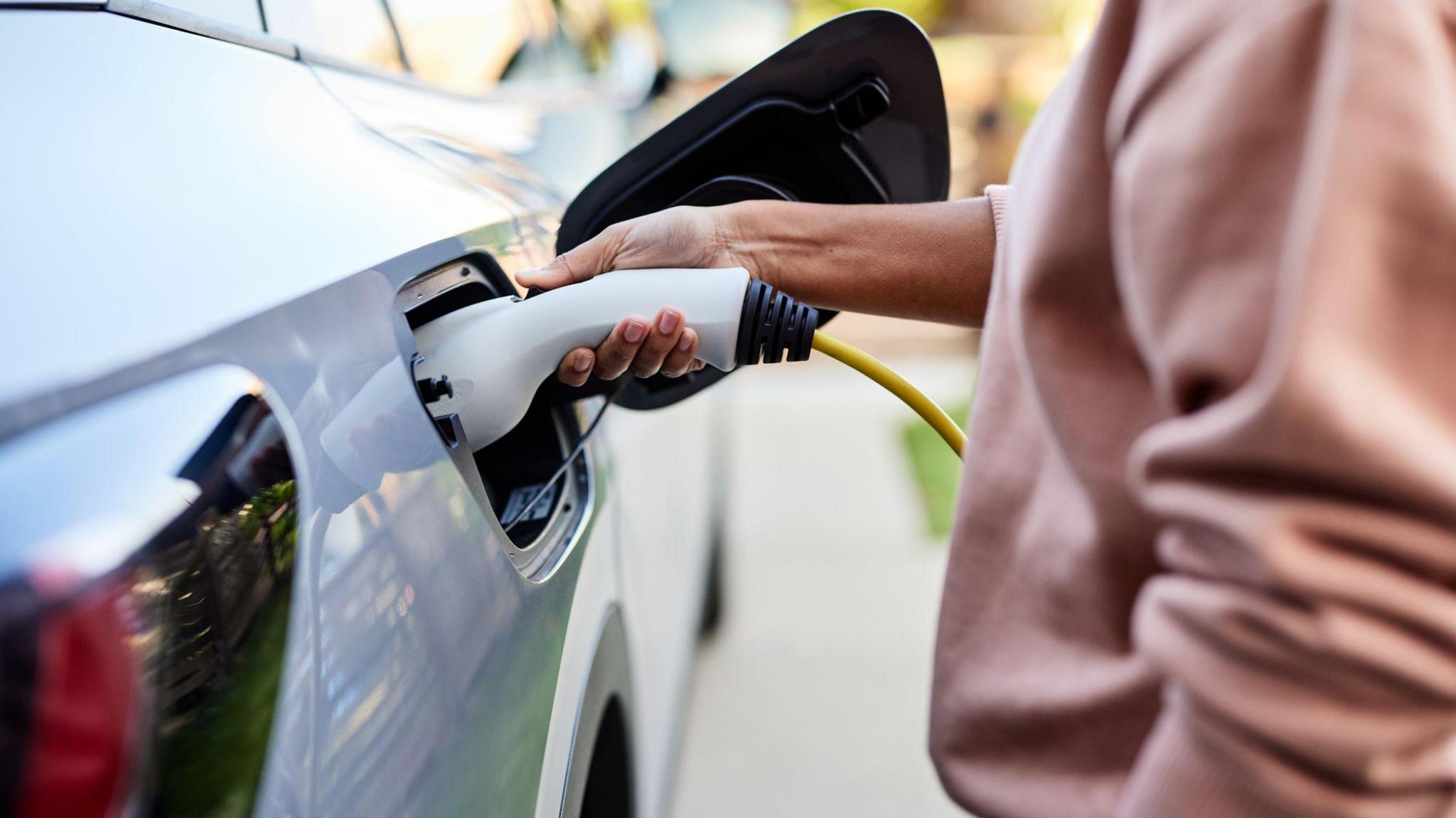 Image source, Getty Images
-
Published14 minutes ago
The UK's electric vehicle (EV) sales target could be cut after the government launched a review following pressure from car makers.
Currently 80% of all new cars sold must be EVs by 2030 – but motor industry figures had urged ministers to reduce that goal, warning it would cost too much and put jobs at risk.
The government has now said it is considering cutting that figure to as far as 50% of all sales by the end of the decade, which it will consult on until late October.
Environmental groups have argued that watering down the target undermines the UK's long-term climate goals.
Under the current policy, known as the ZEV mandate, the percentage of new car sales that need to be EVs increases each year, from 33% for 2026 until it reaches 80% by 2030.
An outright ban on selling purely petrol or diesel cars past 2030 will stay in place, something that Labour promised in its election manifesto.
However the changes now being consulted on could allow car makers to sell more hybrid vehicles as a proportion of the UK's overall sales.
That means if the government drops pure electric sales targets to 50%, the other 50% would need to be hybrid.
Another option would be keeping the target at 80% but with flexibility for car makers extending as far as 2034.
A longer term deadline for phasing out new hybrid sales would also remain in place for 2035.
The policy on EV sales has already changed a lot over the years.
A ban on selling new petrol and diesel vehicles by 2030 was first announced by Boris Johnson when he was prime minister, then pushed back to 2035 by his successor Rishi Sunak.
Sunak also introduced more gradual targets for EV sales under the ZEV mandate.
Labour has previously accused previous Conservative governments of "moving goalposts on phase out dates".
Transport Secretary, Heidi Alexander said on Friday: "It's right we keep targets under review to ensure they're practical and back British industry.
"The end goal hasn't changed – but we need to take business with us on the journey, and that's exactly what we're doing today, by making sure industry has the chance to shape how we get there."
Mike Hawes, boss of the Society of Motor Manufacturers and Traders, the primary car industry lobby group, said the ZEV mandate was "conceived under vastly different conditions".
He called the review "a timely opportunity to adjust the transition so it works for all".
But electric car advocates and climate groups criticised the move.
Tanya Sinclair, the boss of industry group Electric Vehicles UK, criticised the government for "asking whether we should extend the availability of polluting vehicles amid our hottest summer on record."
Gurjeet Grewal, chief of Octopus Electric Vehicles, added that weakening the mandate "would send exactly the wrong signal, just as EVs are becoming some of the best-value cars on the road".
The Green Alliance said watering down targets would "lock in avoidable emissions while undermining the certainty manufacturers need to invest".
Related topics
-
-
Published15 December 2025
-
-
-
Published16 December 2025
-