Eurovision Song Contest 2027 to be held in Burgas, Bulgaria
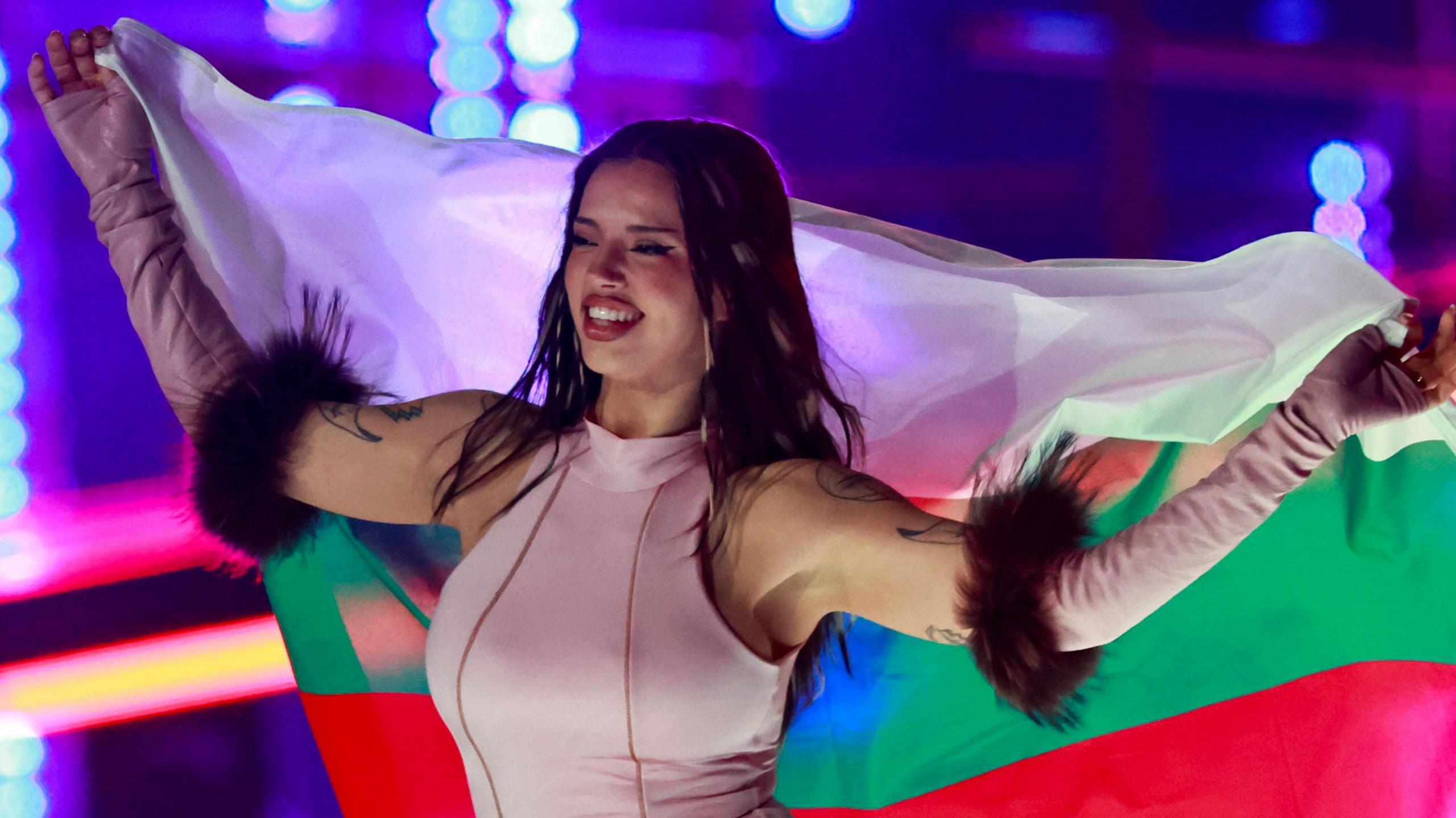 Image source, Hannibal Hanschke/EPA/Shutterstock
The next Eurovision final will take place on 15 May 2027 in Burgos, Bulgaria after singer Dara's win last time out
-
Published21 minutes ago
Eurovision 2027 will be a seaside song contest held in the Bulgarian city of Burgas, organiseres have confirmed.
The competition will take place in the city, which is close to the Black Sea, from 12 to 15 May, the European Broadcasting Union (EBU) and Bulgarian National Television (BNT) confirmed.
It comes after Bulgarian singer Dara won this year's contest in Vienna, Austria in May – her country's first Eurovision win – with her pneumatic dance anthem Bangaranga.
Eurovision Song Contest director Martin Green said they were "delighted" with the next choice of destination, adding that Burgas would "bring something really special" to the competition.
The contest, including rehearsals, the semi-finals and grand final, will be held at Bulgaria's newest sports and entertainment venue, Arena Burgas, which was opened in 2023.
'Truly Bulgarian'
"[Burgas] is a vibrant, welcoming city on the Black Sea with a strong musical and cultural identity, and it has the ambition, infrastructure and passion needed to welcome the Eurovision family," Green said.
"For the first Eurovision Song Contest ever to be held in Bulgaria, we want to create something that feels truly Bulgarian while also being unmistakably Eurovision – a celebration that brings people together through music."
Bulgaria's second largest city was selected for its "strong overall proposition, combining the venue and technical potential" – including hotel capacity, transport and international travel.
It may come as a surprise to some Eurovision watchers that the contest will be held there and not in the capital, Sofia.
Speaking at a press conference after the most recent song contest in May, the director of BNT, Milena Miltenova, said: "I'm so proud of Dara's performance. What she did last night was amazing. And I'm so proud to say welcome to Sofia next year."
Dara – the winning contestant – said something similar: "I'm so happy that you're coming to Sofia next year. I'm happy that it [Eurovision] is going to be in my home."
However, the EBU said Burgas was selected following a "competitive" process involving four Bulgarian cities.
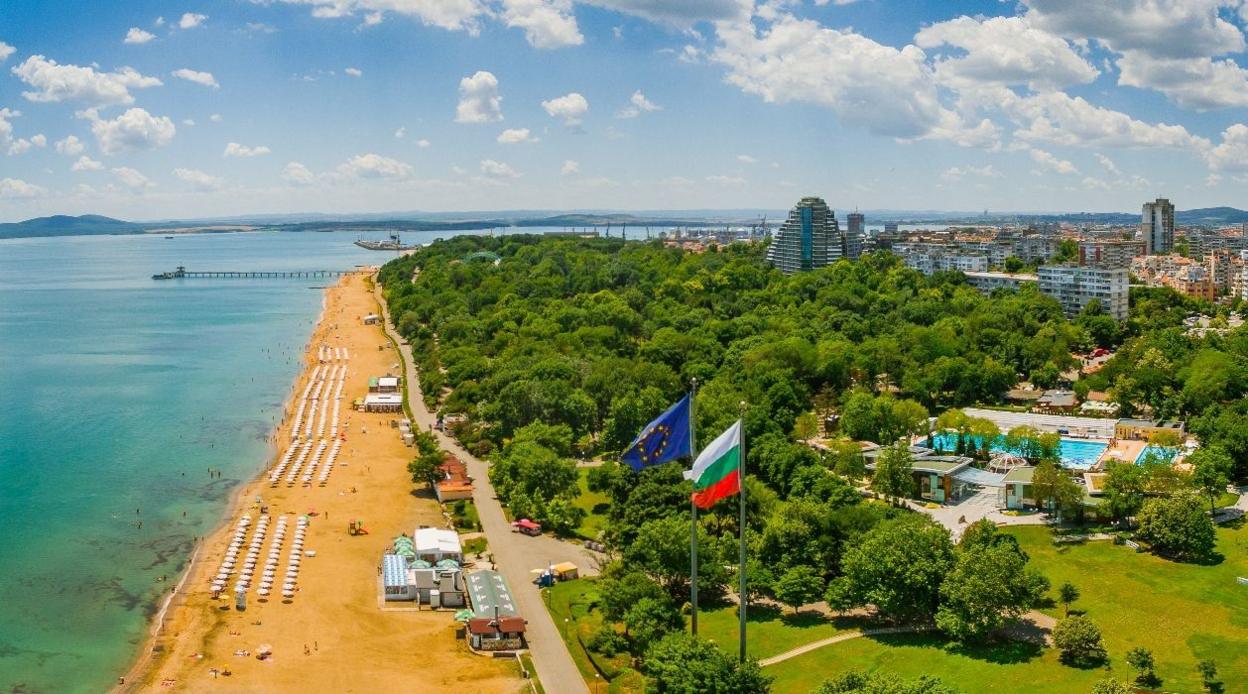 Image source, BNT/City of Burgas
Burgas and Sofia progressed to the final stage of the selection process following the initial bids, which also included Varna and Plovdiv.
Miltenova has said she is now "confident" that Bulgaria will be a "worthy" host and the country would "showcase the very best of our culture, hospitality and professionalism".
She added there would now be "an intensive period of collaboration" between all involved in order "to deliver a contest that meets the high expectations of millions of viewers around the world".
Burgas mayor Dimitar Nikolov added that it was an "exceptional honour".
The Eurovision Song Contest can have an impact beyond the stage, with the event providing a platform for cities and nations to showcase themselves to audiences around the world.
According to the EBU,, external Liverpool saw a €66m (£56m) economic boost after hosting in 2023, Malmö €40m in 2024 and Basel €58m in 2025.
Rule change
Earlier this week, organisers of the song contest updated their rules to state that if a country involved in an armed conflict wins the competition, it will be ineligible to host it the following year.
The amendment was approved by the contest's governing body, following feedback from participating broadcasters after Eurovision 2026 in Vienna.
It stated that winning countries will also be disqualified from hosting if a "sensitive geopolitical situation" affects the "security, safety or stability of their state or immediate region".
The update has been interpreted as a reaction to Israel's continued presence at the contest, amid criticism of its military actions in Gaza and the Middle East.
Last November, following a failed attempt to have Israel suspended, five broadcasters announced they were boycotting the competition – including Eurovision powerhouses Spain and Ireland.
Despite the protests, Israel's Noam Bettan ultimately took second place with his song Michelle.
It marked the second year in a row that Israel had taken the runners-up position – and some participating broadcasters have privately expressed safety concerns over the contest being staged in Jerusalem or Tel Aviv, should the country win in the future.
Although Israel will undoubtedly be seen as the target of the rule change, it will also affect Ukraine, which has been engaged in a protracted war since it was invaded by Russia in 2022.
Ukrainian group Kalush Orchestra went on to win Eurovision that same year, in a symbolic show of public support.
Following their victory, Eurovision organisers undertook a "full assessment and feasibility study" to decide whether the 2023 contest could proceed in Kyiv.
They ultimately decided the security risks were too great, and the UK stepped in to host the competition in Liverpool.
Related topics
-
-
Published17 May

-
-
-
Published19 hours ago

-