Is AI facing a big financial reckoning?
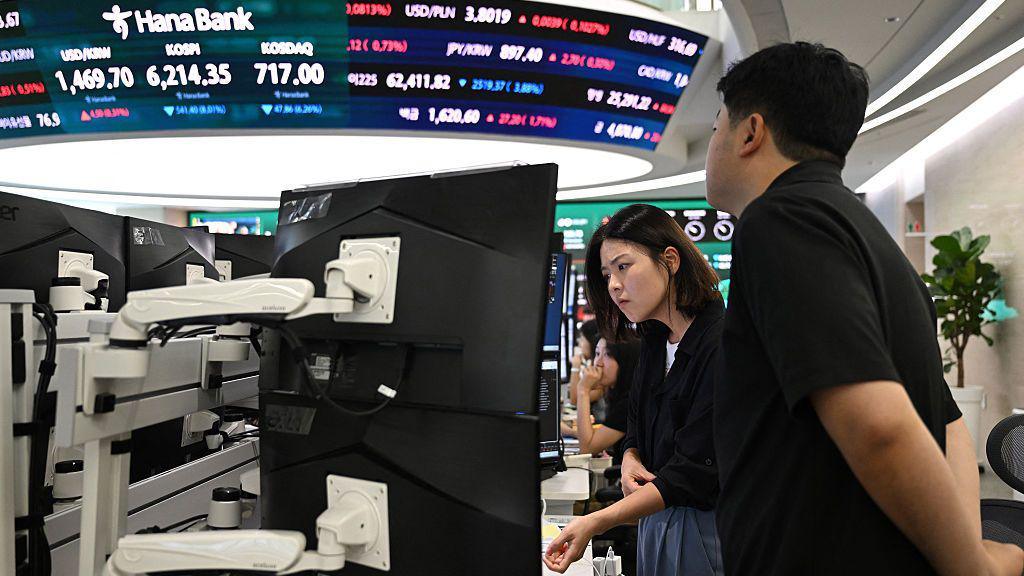 Image source, AFP via Getty Images
-
Published43 minutes ago
Sharp falls in the value of chip makers have stoked investor concerns that the euphoria around AI related companies is fading.
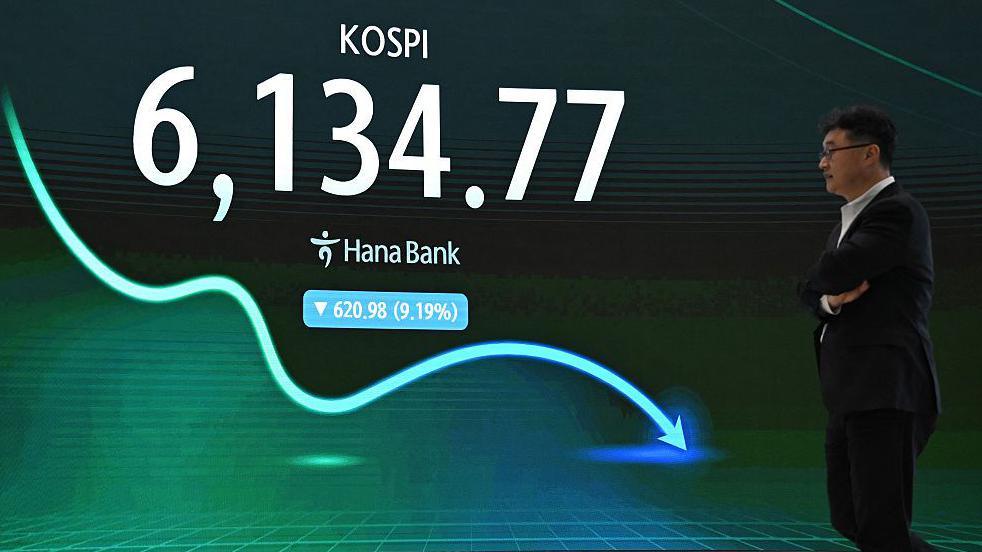
Shares in Korean chip makers SK Hynix and Samsung are down 46% and 35% respectively over the last month as investors worry the recent boom in demand for the chips that power AI is unsustainable.
The South Korean stock market is notoriously volatile, but concerns have spilled over into the big US companies with Micron and Intel which have seen falls of 28% and 35% since last month.
"The AI bubble hasn't burst but it's letting out air," leading tech investor Eileen Burbidge told the BBC, as a number of factors in different parts of the AI ecosystem are darkening the mood.
China breakthrough
One of the triggers for the recent falls was a reported breakthrough in the chip manufacturing process by a Chinese company, potentially making China more self-sufficient in chip design and production.
That has added to lingering concerns that the big AI companies – Meta, Alphabet, Open AI, Anthropic – will find it hard to charge end users enough to justify the hundreds of billions being spent on buying the chips and building the data centres that power the technology.
While increased spending on AI has historically been welcomed by investors in the so called hyperscalers, dialling up the spending has recently not been met with the former enthusiasm.
Meta shares are down 15% over the last month, while SpaceX – which is predominantly an AI company – has seen its shares fall 14% from its much-hyped IPO debut and nearly 50% from its peak in June.
Meanwhile Apple – which has largely sat out the AI arms race – has seen its shares rise 21% over the last month to reclaim its title as the world's most valuable company from chip maker Nvidia.
London's benchmark FTSE 100 index, which does not contain any major tech companies, also briefly touched a record high on Wednesday morning – one of the few periods where it has benefited from not being tech-heavy.
Growing concerns about AI
Some have likened the transformative potential of AI to the introduction of electricity or the railways. While it is true that the railroads transformed economies – particularly of the US – plenty of people lost money along the way. Unlike rail tracks – which once built are good for decades – data centres are likely to need upgrading frequently to include the latest and fastest processors.
Add to that lot, concerns that some of the big AI companies have taken big stakes or lent money to each other leading to circular funding that means that any potential failures could have a damaging impact on the fortunes of others.
There is also increasing cultural opposition to the build out and adoption of AI.
A growing number of national, state or local governments are pausing, banning or restricting new data centre construction on environmental grounds thanks to their vast water and energy needs.
Meanwhile, high profile AI advocates have found themselves booed by students who fear that AI will replace many graduate level jobs.
Despite all of that, Eileen Burbidge is still positive. "I see the glass half full – if you bought shares in chip makers a year ago you are feeling pretty good right now."
Shares in Samsung and SK Hynix are up threefold and fivefold respectively over the last year, leading many to conclude that caution and profit taking after such massive gains was inevitable – and indeed healthy.
But there is no doubt that investors are watching companies plans for spending and their projections for when they get paid back with post euphoric scrutiny.
Related topics
-
-
Published1 day ago
-
-
-
Published2 days ago
-