Rhine falls to record low levels as drought strains Europe's rivers
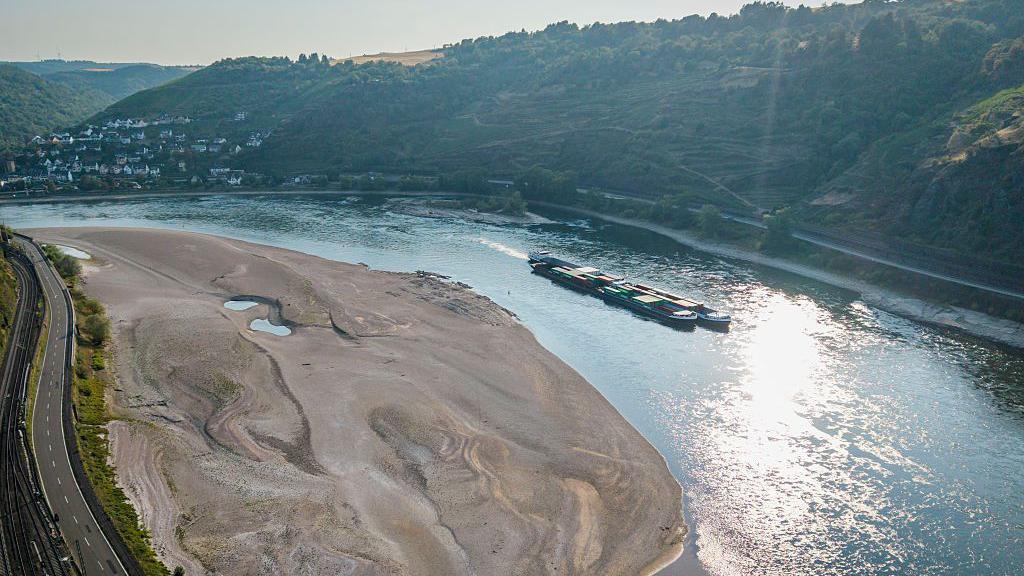 Image source, Getty Images
The Rhine fell to its lowest ever levels at points in Germany and the Netherlands as heatwave conditions continue
-
Published3 August 2026, 15:38 BST
The River Rhine has fallen to record low levels in several locations in Germany and the Netherlands as prolonged heatwaves continue across Europe.
Last week, levels were measured in Cologne in western Germany and in Lobith, where the Rhine crosses from Germany into the Netherlands, that were lower than at any point since records began.
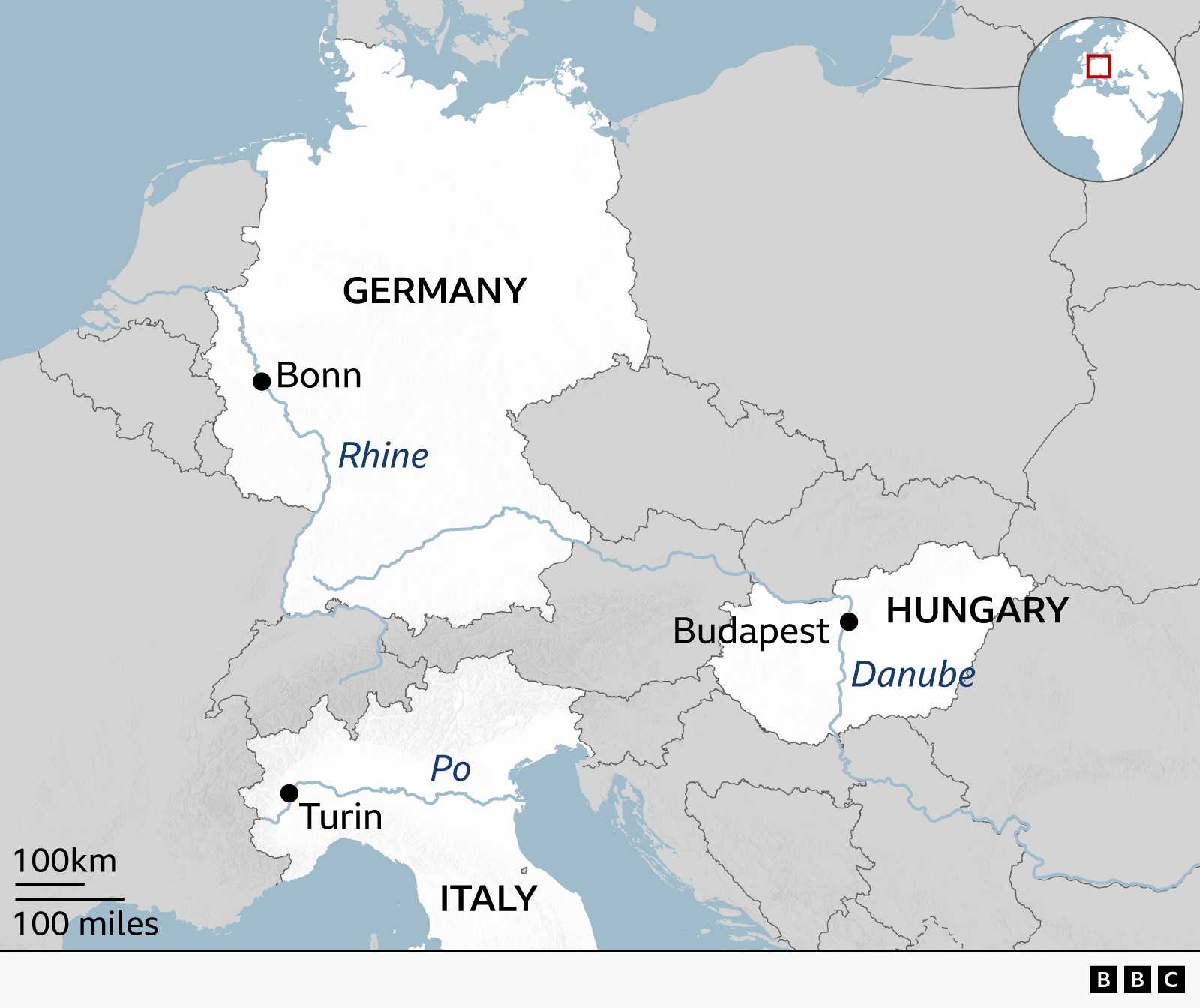
Other major European rivers with important transport, industrial and agricultural functions have also seen record low levels, including the Danube, which flows through 10 countries, and Italy's Po river.
Drought conditions remained stable and critical in most of Europe and worsened in central-western Europe in mid-July, according to the EU's Drought Observatories.
Renewed heatwave conditions are due to continue for at least another week, pushing temperatures above 40C in many central and southern European countries.
Germany's Low Water Information System (NIWIS) said that 44% of the Rhine measuring stations and 78% of those on the Danube had recorded extremely low water levels at the end of July.
The Rhine – which starts in the Swiss Alps and empties in the North Sea – is one of Europe's busiest waterways. Decreasing water levels have sparked concerns about the economic fallout of having to limit navigation and shipping.
On Friday, the navigable water depth at the chokepoint of Kaub near Koblenz hit the 2018 record low of 25cm, before recovering slightly on Monday.
The Kaub gauging station in western Germany is a key indicator of navigability on the Rhine because it measures how heavily cargo vessels can be loaded. Low water levels measured there can severely restrict inland shipping.
Martin Wolters of the Rhine Waterways and Shipping Authority told German outlet WDR that although shipping on the Rhine was unlikely to be suspended altogether, precautions would have to be taken, such as spreading out cargo among more vessels to make them less heavy.
In time, this can result in higher transport costs and supply bottlenecks, Wolters said.
"There comes a time when loads are too small to be worthwhile or vessel owners are worried about damaging their ships," one commodity trader told Reuters.
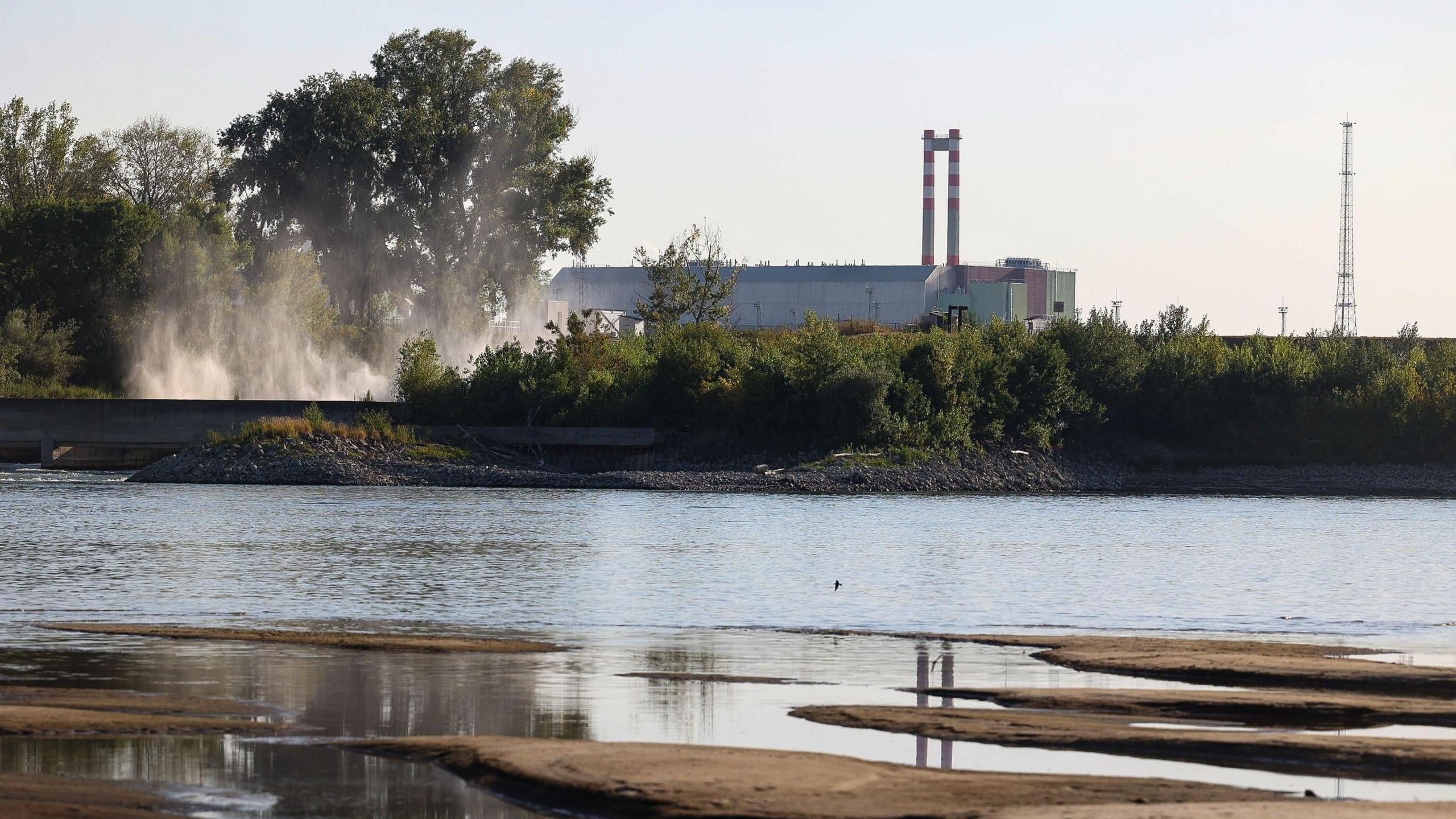
Last week, the waters of the Danube fell to the lowest levels for 30 years in several countries, including Serbia and Romania, leaving Hungary's only nuclear power plant on the brink of shutting down.
The facility is operating at a reduced capacity and officials are monitoring whether it may need to be taken offline completely.
The drought of the Danube is also causing serious disruption to power supplies in Serbia and Romania.
To play this video you need to enable JavaScript in your browser.
This video can not be played
Watch: Moment controlled explosion blasts rock in Danube to redirect water
Serbia cut output at its coal-fired power plants due to the lack of water disrupting cooling systems, while Romania carried out a controlled explosion on a large rock on the banks of the Danube to increase waterflow to the Cernavoda nuclear power plant.
Two car plants in Romania run by Dacia and Ford have agreed to halt production for more than a fortnight to reduce electricity consumption.
Italy's longest river, the Po, hit a historic low near the northern city of Cremona in late July. Authorities raised the drought alert level to "high" across the entire Po Valley, while experts have issued warnings about potential disruption to the drinking water supply.
Lower river flows at the mouth of the Po have also pushed saltwater from the sea into the riverbed, disrupting the ecosystem and causing serious issues for farmers who use water from the Po to irrigate their crops.
A recent study by scientists at the World Weather Attribution group found that there had been no clear long-term trend towards lower rainfall across much of Europe.
But the researchers said that human-caused climate change was increasing evaporation of moisture through higher temperatures, making drought conditions more likely.
The hot, dry weather also increased the demand for water for household, agricultural and industrial use.
Prolonged periods of drought can also affect the water levels of lakes, impacting availability of freshwater resources.
The EU's Copernicus climate service said the 2022 drought in Europe contributed to increased wildfire activity – which in drove higher than average carbon emissions.
Additional reporting by Mark Poynting
Related topics
-
-
Published27 May

-
-
-
Published3 days ago
-