The heatwave workers 'like cats on a hot tin roof'
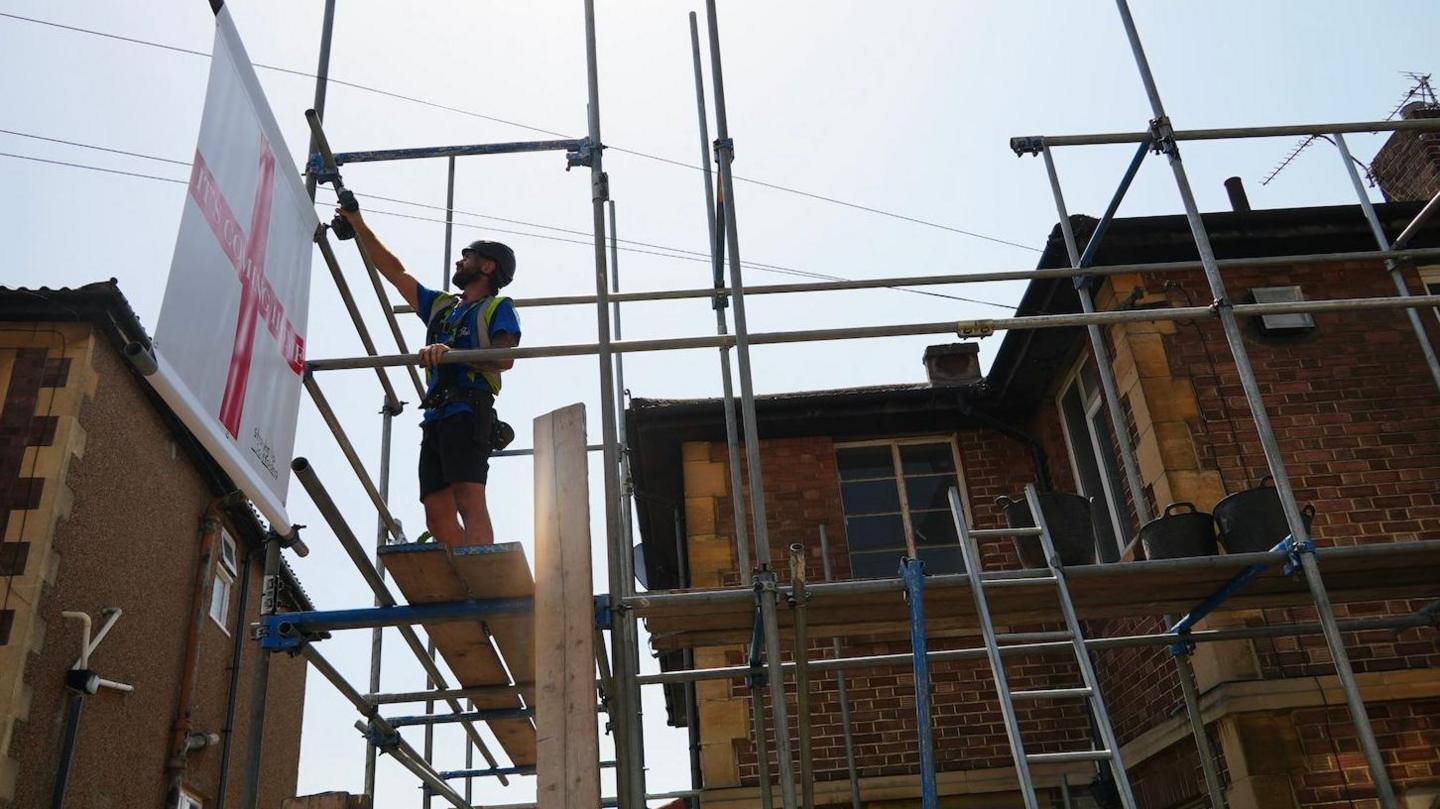
Temperatures passed 33C in parts of the West on Wednesday, making working outside much harder than usual
-
Published4 hours ago
If you think it is hot where you work, try fitting aluminium solar panels to a steel roof. Or carrying scaffolding tubes up a ladder in 33C (91.4F). Or driving a bus with no air conditioning.
Ben Harrison, founder of a Gloucestershire solar panel installation firm, said his crews are "like cats on a hot tin roof".
In Bristol, scaffolders started early on Wednesday, at 06:00 BST. But by midday the tubes they handle were "burning hot", and they called an early finish.
Bus drivers said their uncooled cabs are well over 40C (104F).
Yet there is no law telling employers to call a halt when the heat records are broken. So what are companies doing to keep their staff cool, and what can you do if your workplace is sweltering?
The solar installers
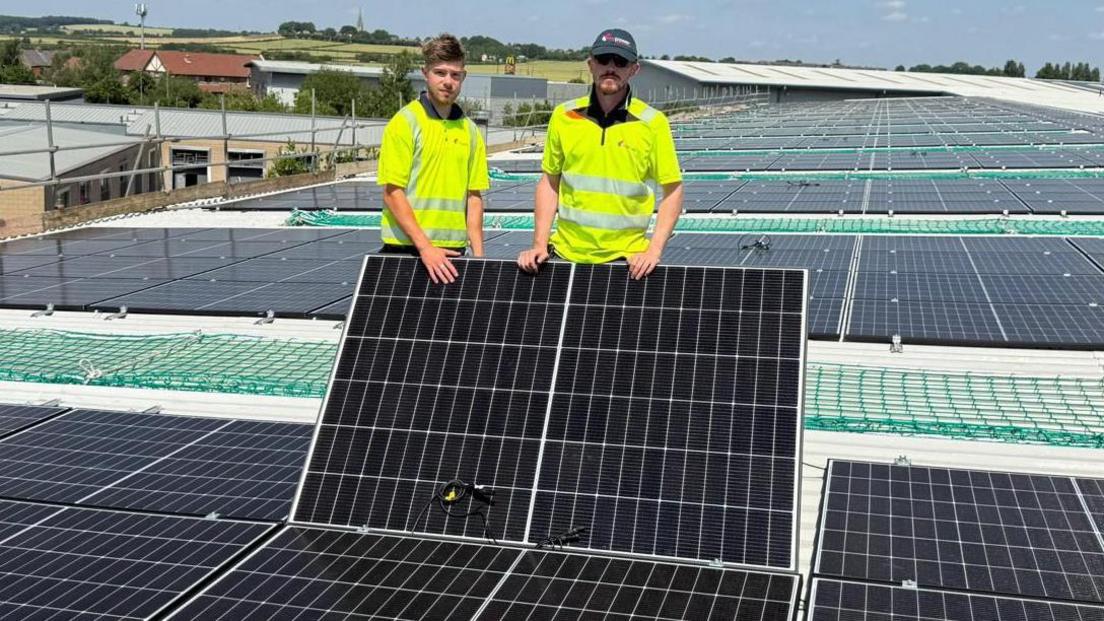
Technicians install solar panels to harness the sun's power, but have to endure scorching heat as they work.
Ben Harrison's firm, 'Mypower' is powered by the sun, so he feels he cannot complain about it.
His teams fit solar panels to the rooftops of farms and factories across the country, cutting their electric bills and carbon emissions.
But in the heatwave, there is no escape from the sun on a roof.
"The temperature of that heat reflecting off the roof is significant," Harrison explained.
"We need to look after those guys out there. Here we are in the middle of the summer, and they are like cats on a hot tin roof, dare I say it."
Like many firms, Mypower has protocols that kick in at 30C – extra water breaks, cool boxes carried onto the roof and so on. But with rooftop temperatures now well over 35C and in full sun, they have been shortening their working days this week.
The teams now start at 06:00, two hours earlier than normal, and finish at noon instead of 16:30. This, Harrison admitted, is costing the firm money.
"We've had to delay a job, slow things down, and be working short time, but we've got to look after the guys that work for us."
The scaffolders
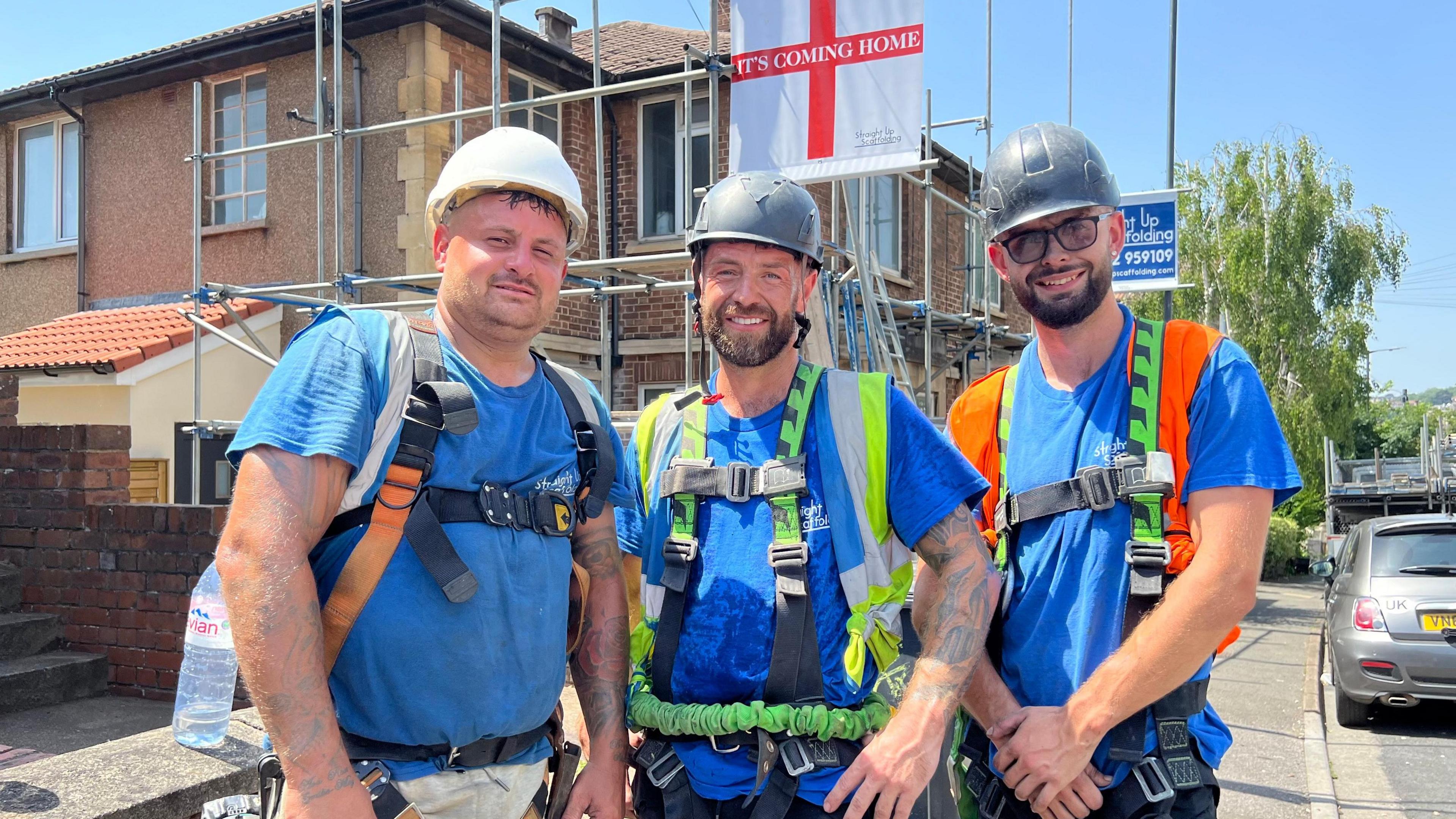
"We're melting, but we carry on", say scaffolders Phil, Lewis and Louis.
"It's a hard game anyway what we do," scaffolder Lewis Winkworth told me. "But this heat makes it twice as hard."
When I met Lewis and his team from 'Straight up Scaffolding' at 13:00 on Wednesday, they were "melting hot".
They had been working on a suburban Bristol house since 06:00, but the earlier start made little difference, Winkworth said.
"It's already super hot when you wake up," he said.
Along with the harnesses, hard hats and hi-vis, the safety kit now includes suncream and plenty of water bottles.
There's plenty of banter as they work. I ask Winkworth's colleague Phil Williams if the scaffold tubes are too hot to handle.
"They are hot, sure – but we're used to them," he laughs. "We've got rhino skin!"
I wonder if they considered cancelling work for a few days while the heatwave grips Britain.
"It is hot, but we've just got to get on with it," Winkworth smiles.
"Someone's got to do it, and there's no escape from the sun in our trade."
The bus drivers
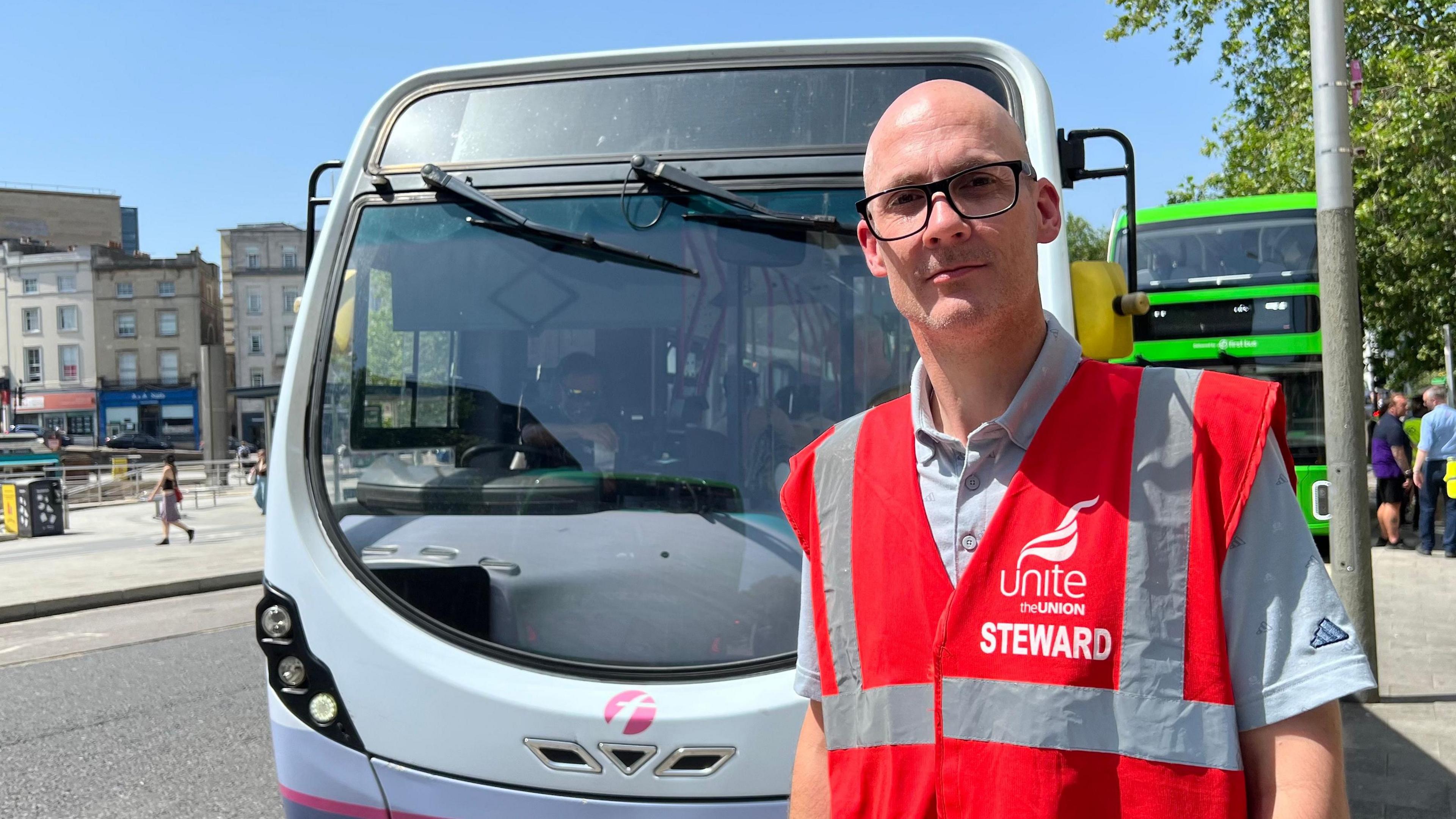
"It's unbearable", says Darren Ford describing the 45 buses in Bristol's fleet that have no air conditioning.
"You've got the sun beating down, magnified by the glass, and the bus is 20 years old with no air conditioning, it's unbearable," says Darren Ford.
He represents Bristol's bus drivers who are in the Unite Union. While the city boasts a few hundred shiny new air-conditioned electric buses, there are still old 'hothouses' on the road.
About 50 buses, Ford tells me, have no air-conditioning. With the doors opening at every stop, the driver "just cooks".
One bus driver tells me he feels "like I'm in a sauna". He flashes a rueful smile, "we're used to it, but it's pretty awful."
The bus company are replacing the fleet fast, with electric buses and modern air-conditioning. During the heatwave, they are running as few older vehicles as possible, but there are still plenty on the road.
"Our drivers are sat there for four or five hours at a time," Ford continues.
"It's just unbearable, and these old buses need to be retired."
How hot is too hot?
"There is no official maximum temperature at the workplace," explained Luke Menzies, a leading Bristol employment lawyer.
The law does protect some workers, he said, who are pregnant or disabled.
"You might be protected by Section 44 of the Employment Rights Act, which is where an employee says that I have the right to protect myself from 'serious and imminent danger'."
But for most workers, the law simply relies on the usual duty of care that an employer has to provide a "reasonable" workplace.
What if your office or factory is sweltering hot and the boss refuses to do anything?
Again, Menzies says there is no easy law to turn to for help.
"Perhaps strength in numbers is the answer in some way. Perhaps you can get together with some of your colleagues and lead a delegation, speak to your manager.
"Hopefully you'll be met with a helpful response, because managers are people too, and they're going to probably be just as hot as you are."
Cool concrete
While thousands work on hot building sites, the biggest construction project in Europe actually has some cool spots.
At Hinkley Point, on the West Somerset coast, they are building a nuclear power station. I have been there on sweltering hot days, dressed from top to toe in nylon hi-vis, thick safety boots and a hot hard hat.
But now the project has moved on, many of the workers are deep underground, in the tunnels that will carry the cooling water. Or fitting cables inside new cavernous buildings with concrete walls thick enough to protect nuclear reactors.
Rob Jordan, construction director for Hinkley Point C, said: "We are prioritising working indoors, in our buildings and underground galleries where it's cooler thanks to the thick concrete structures."
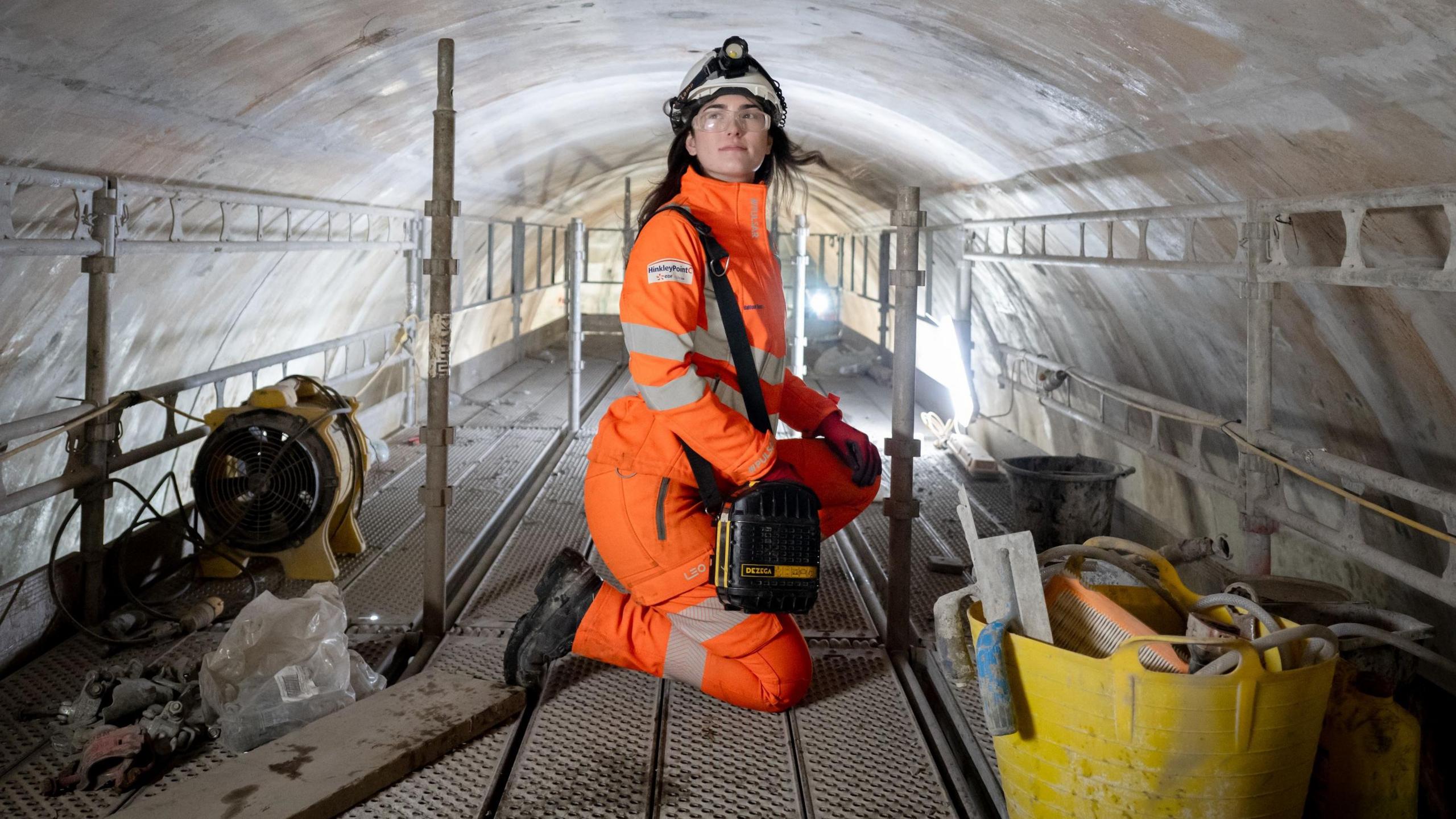 Image source, Hinkley Point C
Hundreds of workers at Hinkley Point C are sheltered from the heat by thick concrete, like this water inlet.
Scientists are clear that climate change, caused by carbon emissions from human activity, is making heatwaves like this " more likely and more intense," as Professor Stephen Belcher, Met Office chief scientist, put it.
"Events like this bring home the implications of climate change," he added.
Ben Harrison's firm exists to install solar power, reducing carbon emissions that contribute to these heatwaves. But the irony of having to stop work because of one is not lost on him.
And at Hinkley Point, Rob Jordan also pointed out that the hot weather "reminds us why we're building Hinkley Point C."
"All this work is so that we can have reliable, low carbon power to help combat climate change," he said.
Get in touch
Tell us which stories we should cover in Bristol
Follow BBC Bristol on Facebook, external, X, external and Instagram, external. Send your story ideas to us on email or via WhatsApp on 0800 313 4630.