US says sanctions will 'squash' Iran's economy and 'collapse' its regime
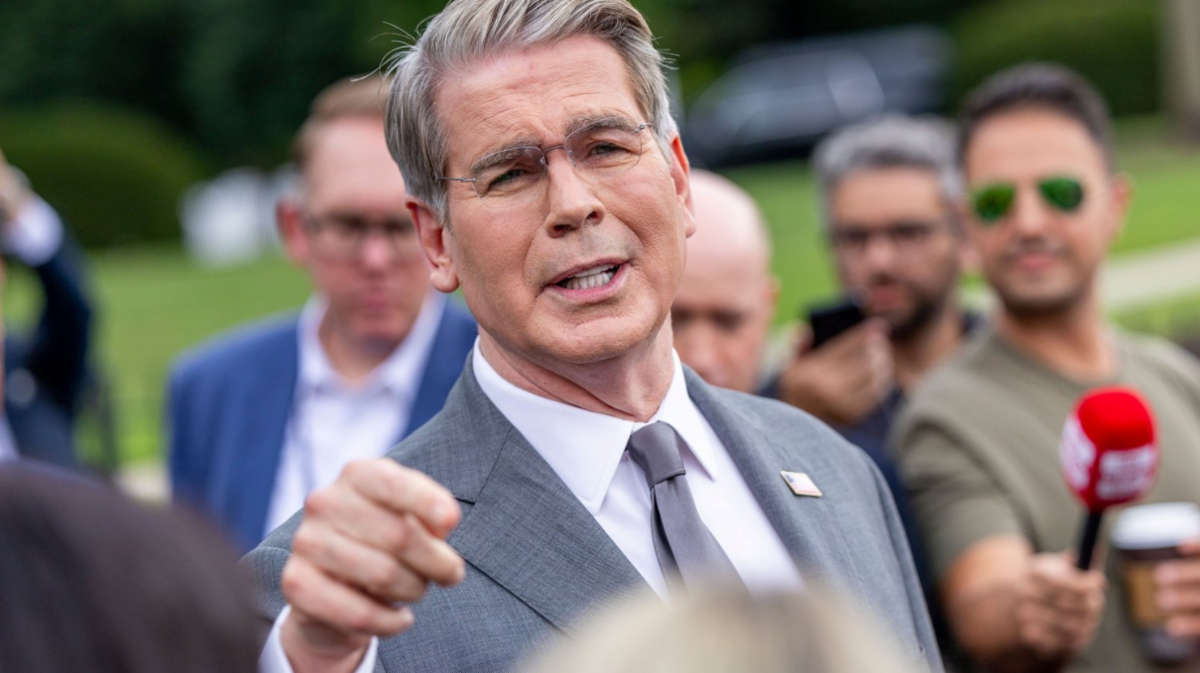 Image source, EPA
Bessent believes international sanctions will 'minimise the need' to return to war with Iran
-
Published20 August 2026, 19:40 BST
US Treasury Secretary Scott Bessent urged US allies to support Washington's efforts to "squash" the Iranian economy.
"We are going to collapse this regime. It is time for our allies and the rest of the world to make a decision," Bessent told broadcaster CNBC.
"You are either with us or against us," he said.
Bessent's remarks come after US President Donald Trump said that countries providing "any type of lifeline" to the Islamic Republic's regime will face "tremendous economic consequences".
Bessent did not offer any insight on the measures Trump's team was looking to implement, but said the planned pressure campaign on the Iranian economy would minimise the need of a "large-scale kinetic restart" of the conflict.
-
How Iran's new regime is very different to what came before
-
Published5 July
-
-
Faisal Islam: Iran war pause is welcome but the economic scars will last
-
Published8 April
-
The US and Israel started a war with Iran in February, arguing the strikes were to prevent Iran from developing nuclear weapons, which Tehran has consistently denied.
Iran, however, responded by attacking Israel, US bases across the Middle East as well as targeting Gulf Arab allies of the US.
Since then, Iran has largely closed the Strait of Hormuz – the waterway through which some 20% of the world's oil and liquefied natural gas used to transit – causing wild fluctuations in prices on world markets.
The US and Iran agreed a ceasefire in April – and then another one in June, both aimed at facilitating negotiations to end the conflict.
However, the truce has been consistently broken and talks appear to have stalled but, instead of returning to war, Trump is gearing up to unleash the "most crushing economic operation ever taken against any country".
Bessent said the new economic penalties will be part of "the greatest co-ordinated economic isolation in the history of the world".
"If you insist on doing business with them, either transferring money, buying their oil… then the US Treasury and the US government will put [their] full might and force towards enforcing against you," the treasure secretary said referring to the US's international trading partners.
Bessent confirmed further details about the plan will be made public at a press conference on 24 August.
The Iranian economy has long been struggling under the weight of decades of international sanctions, which left it in tatters.
Earlier this year, Iran experienced weeks of protests due to the spiralling cost of living and inflation – with everyday Iranians blaming the regime for their difficulties.
Official figures show that in the 12 months to February 2026, the price of basic necessities increased by an average 60%, while food prices doubled in the same period.
At the time, Trump told demonstrators "help is on the way" as he urged them to "keep protesting".
The attacks on Iran ensued – and later led to the US to imposed a blockade of Iranian ports, threatening further sanctions.
In April, the US launched a wave of sanctions on foreign banks and firms doing business with Tehran after it became apparent military operations had not led to the overthrow of Iran's regime nor its surrender, as Trump had initially hoped.
Operation Economic Fury, announced by the US Treasury Department and the Pentagon, aimed at degrading Tehran's warfighting capability by cutting off its revenue streams, and also included a naval blockade aimed at stopping Iranian exports.
The Memorandum of Understanding (MoU) signed by Iran and the US in June included a clause stating that the US would "terminate all types of sanctions" against Iran in an agreed-upon schedule.
One resident in the central Iranian province of Khuzestan told the BBC the country has a long experience with sanctions, and will be able to overcome the additional economic pressure.
"There may be an impact at first, but that doesn't necessarily mean Iran won't be able to overcome the crisis," he said.
Another resident also doubts fresh penalties will have an impact on the longevity of the regime.
"Not everything changes because of statements made by President Trump," she told Middle East Lifeline.
"Iran has been living under sanctions for years, and people have become accustomed to this situation. I'm sure Iran will find other ways to continue trading."
"Of course, there will be some impact and the economy may weaken, but that doesn't mean it will collapse."
Related topics
-
-
Published10 August
-
-
-
Published4 days ago
-