'We're still cold paying £300 a month energy bills'

Pat Snell (right) with John says she fears how high their energy bills will be later in the year
-
Published1 hour ago
A pensioner says trying to keep warm and afford heating this winter will be "horrific" amid rising energy costs.
Pat Snell, from Redditch, Worcestershire, said she and her husband, John, who had a stroke, relied heavily on heating to keep him comfortable last winter.
"Even on a fixed-price tariff, our energy bills were £300 a month, and we were still cold," she said.
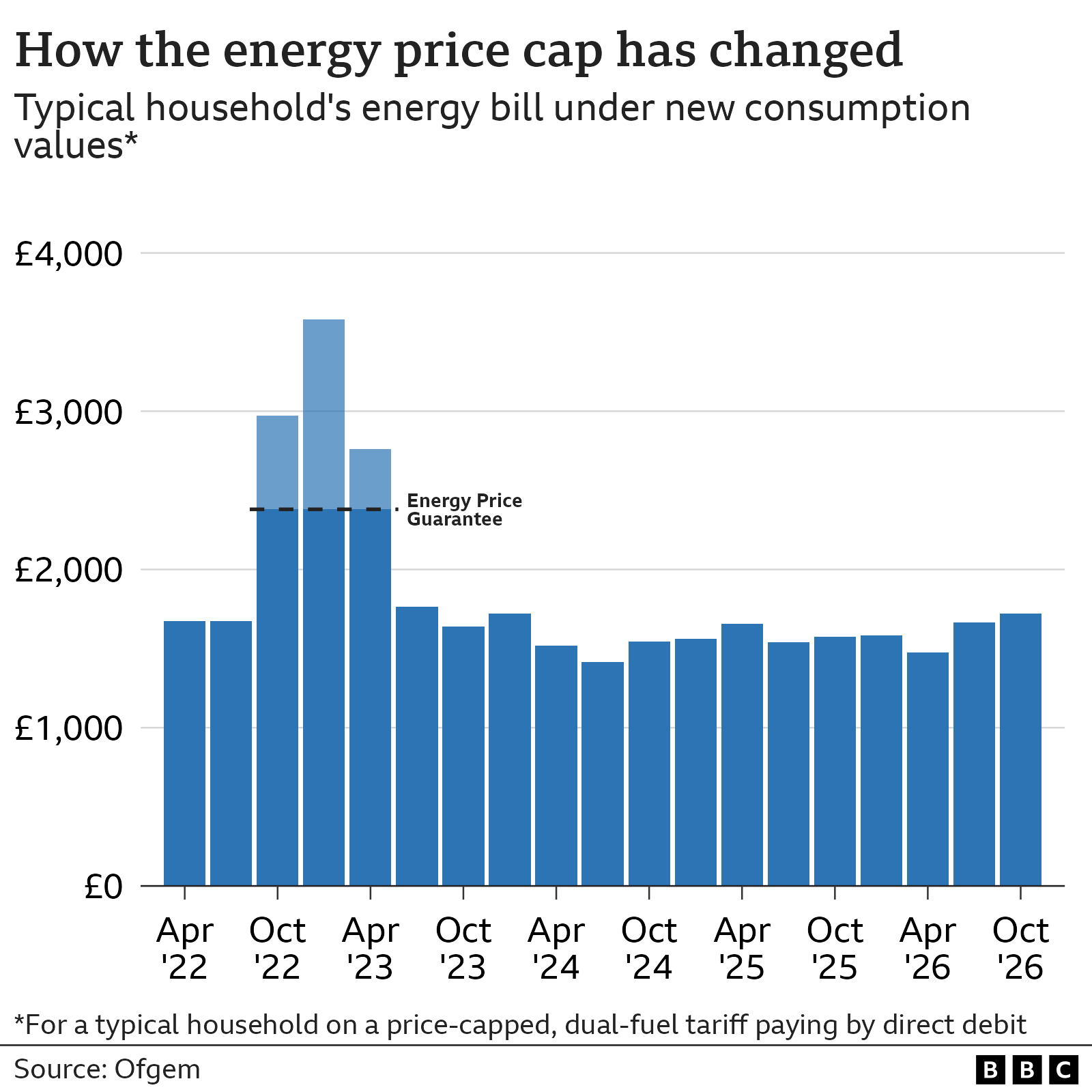
Snell raised concerns about further rises as millions of households in England, Scotland and Wales face higher energy bills from Thursday, when Ofgem's latest energy price cap increase comes into force. The regulator said typical households on standard variable tariffs will pay about £60 more a year, taking annual bills to £1,723.
The extra cost comes at a time when, Snell said, her household was already carefully managing energy use.
"We never even put the temperature up over 18C, and most of the rooms were closed.
"I don't even want to think about what it's going to cost in December, January and February."
Snell added that her fixed-rate tariff comes to an end in late October, meaning they could soon face higher costs.
The government said households would see some relief through its removal of VAT on domestic electricity bills, which it said had helped limit the increase, while the Warm Home Discount will provide eligible households with £150 off their bills this winter.

Lorraine Stevenson says she is already limiting her energy use
Snell is not the only resident in the town that is concerned about struggling to afford heating and other essentials this winter.
Another pensioner, Lorraine Stevenson, said she was already limiting energy use where possible.
"I live on my own, and I live in a small house, so I struggle because obviously, just on a pension, it's not easy," she said. "Any reduction helps.
"I look forward to getting the winter fuel payment. People say it doesn't really help, but it does help through the winter months because obviously you're paying a lot more."
She added: "You don't keep the house really warm, but you can't be cold, can you? Especially as the older you get."
Among others worried about the rise is Najibullah Rahimi, who came to the UK from Afghanistan with his family about a year ago.
He told the BBC he is currently seeking work and is expecting his benefits to be capped, leaving him concerned about how his family will manage as household costs continue to rise.
"The gas bill and electricity bill and internet bills and money for the children are difficult now for me," he said.
The additional pressure of higher winter energy bills, he said, would make an already difficult situation even more challenging.
Kelly Birkett, an accountant from Redditch, works from home. She is a mother of two and her husband is self-employed.
While they are both earning, the cost of energy is continuing to place pressure on the household income, and they are reining in family experiences.
"It's heartbreaking how much money you don't have to actually live your life – not just survive, but to live it and have those memories with your family and your friends and your children.
"As a family we work really hard and we wonder why? I don't think the politicians 'get it' and because they don't get it, they think they're doing enough but they're not."
'We will have to cut down'
The rise affects around 22 million households on default tariffs regulated by Ofgem, while about 11 million households on fixed-rate deals will not see their prices change immediately.
A typical household on a standard variable tariff will see annual bills rise by about £60 to £1,723, although the amount paid will ultimately depend on how much energy is used.
Ofgem said the increase had been driven largely by higher wholesale gas prices linked to conflict in the Middle East. The regulator said prices remain around 52% lower than they were at the height of the energy crisis in 2022, although charities and consumer groups have warned many households are still struggling with costs that remain well above pre-crisis levels.
The government said its removal of VAT on domestic electricity bills had helped limit the increase, with Ofgem estimating bills would otherwise have been about £45 higher. Eligible households can also receive a £150 Warm Home Discount this winter.
For many of those the BBC spoke to in Redditch, the concern was not just about a £5-a-month increase, but what it means when colder weather arrives and household budgets are already stretched.
"We'll just have to cut down on something else," said Stevenson.
"But you can't be cold."

Caroline Fortune encourages people to regularly review their tariff
Caroline Fortune, from energy advice charity Act on Energy, said many households had not yet felt the full effect of recent energy price increases because energy use typically falls during the summer months.
"The price cap went up in July, and because we haven't all turned our heating on yet, we've not felt it yet," she said.
"On 1 October it's due to go up again, and it's predicted to go up again in January, so it's something we need to be aware of."
Fortune said consumers should regularly review their tariff and not assume staying with the same supplier would offer the best value.
She encouraged households to check whether they were eligible for support schemes, including the Warm Home Discount, and to seek advice early if they feared falling behind on payments.
As temperatures fall, she advised people to be mindful of their energy use and focus heating on the rooms they spend most time in.
"If you're really struggling, heat the person, not the room," she said.
She said demand for help from the charity had risen as households grappled with multiple financial pressures.
"It's not as simple as having one small problem," she said.
"People's lives have got more complicated."
Get in touch
Tell us which stories we should cover in Hereford & Worcester
Follow BBC Hereford & Worcester on BBC Sounds, Facebook, external, X, external and Instagram, external.
Related topics
-
-
Published15 hours ago

-
-
-
Published10 August
-